
Counterspeech
Manual
Counterspeech

Initiative
The goal of this resource is to provide a living record and adaptable set of tools, techniques, and procedures (TTPs) for individuals, civil society, and policymakers, as well as media, technology, and social media corporations, to understand and offer strategies to counter hate speech both in the Indian and Indian diasporic setting.
The resource serves as a point of reference for understanding the complex challenges involving harmful narratives as well as a set of protocols and strategies for countering hate and polarization. As an educational and practical resource, it is designed to be adaptable to a variety of situations by a range of actors, each of whom can draw on it and apply it to particular situations necessitating counterspeech.
The resource applies to both the digital domain and in-person spaces, including political rallies, social gatherings, and everyday public forums such as streets, markets, malls, restaurants, and public transit. It is relevant to any social interaction, public and private. It also applies across digital and in-person spheres of social life, given that the online and offline domains of social and political life, communication, speech, and behavior are increasingly intertwined in often inseparable ways.
The internet is the primary mode through which hate speech spreads and gets amplified across the global Indian diaspora, as is the case with harmful speech in general. A document on hate speech produced by the Council of Europe notes, for instance, that “in recent years, hate speech has increasingly been spread through the internet.”¹
Accordingly, the same online platforms through which hate spreads urgently need to be utilized to develop a robust culture of counterspeech against harmful narratives that target the most vulnerable members of our communities. The lessons regarding online hate speech and the tactics to counter it can also be translated into in-person contexts with appropriate adaptation.
1.1 NEED FOR COUNTERING HATE SPEECH FOR DEMOCRACY
The current global political order is one in which democracy — as a value, principle, or formal political system — is under assault everywhere. Along with the degradation of democracy in authoritarian regimes, democracies like the U.S. and India have also witnessed the subversion of democratic structures and erosion of democratic values over the last decade.
During this period, many countries across the world, including India, Turkey, France, Italy, Hungary, Germany, and the UK, have seen a resurgence of far-right and extremist movements. The causes of the simultaneous attrition of democracy and growth of far-right movements are complex, including rising economic inequality, backlash against globalization, strident nationalism, increased migration, and weakening of international human rights in the aftermath of the American War on Terror following the terrorist attacks of September 11, 2001.
A singularly important factor in the damage to democracy across the globe is the explosion of social media and the ensuing tidal wave of hate speech and misinformation on digital platforms. Online hate and misinformation both contribute to and feed off majoritarian grievances, economic populism, anti-migrant sentiment, and hypernationalism, in an unhealthy relationship that bodes ill for minority rights, social harmony, and the functioning of democratic institutions.
There is a substantial and growing body of scholarship demonstrating the deleterious impact of hate speech², including its online manifestations, on democratic norms, social cohesion, and the rule of law. This research consistently shows that sustained exposure to hate speech normalizes hostility and dehumanization of various groups, creating conditions that facilitate real-world violence against them.
These harms are disproportionately borne by religious, ethnic, caste, and racial minorities, as well as by the most marginalized members of societies, for whom online incitement frequently translates into offline intimidation, discrimination, and targeted violence.
Hate speech, by one account, “leads to dangerous divisions in society as a whole, affects the participation and inclusion of all those targeted by it and threatens democracy.”³ Combined with misinformation, hate speech increases social polarization⁴ and undermines social cohesion.
As legal scholar Alexander Tsesis notes, by intimidating specific targeted groups, “hate speakers” seek to exclude them from the process of deliberative democracy and undermine important legislative and policy discussions by narrowing the range of voices that participate in these debates.⁵
Legal scholars Geoffrey R. Stone and Lee C. Bollinger point out that the problem of “bad speech” on the internet, including hate speech, is one of the most urgent issues confronting global society today.⁶
Clearly, hate speech, especially in the era of the internet, is a critically important challenge for civil society, states, and social media platforms. Yet the solution to combating hate speech is not simple, given the necessity of protecting free speech as a democratic principle and the risk of restricting freedom of expression through attempts to counter hate speech.
2.1 DEFINITIONS
The Merriam-Webster dictionary defines hate speech as “speech that is intended to insult, offend, or intimidate a person because of some trait (such as race, color, national origin, religion, gender, sexual orientation, gender identity, or disability).”7 Yet, the term encompasses a broader range of meanings than just speech that is defined fundamentally by negative intention or focused on an individual. Hate speech is a fuzzy concept, and there is no consensus across societies or stakeholders on precisely what it constitutes or entails.
Noting that there is no globally or universally agreed upon definition of hate speech, the United Nations Strategy and Plan of Action on Hate Speech defines it as “any kind of communication in speech, writing or behaviour, that attacks or uses pejorative or discriminatory language with reference to a person or a group based on who they are, in other words, based on their religion, ethnicity, nationality, race, colour, descent, gender or other identity factor” (emphases in original).8
The Rabat Plan of Action proposes a six-part threshold test, articulated by the Office of the High Commissioner for Human Rights (UN Human Rights Office) and derived from Article 20(2) of the International Covenant on Civil and Political Rights (ICCPR), to determine whether hate speech meets the legal threshold for incitement to discrimination, hostility, or violence.9
The six factors include:
Context: Assessing the broader social and political environment at the time the speech was delivered, including how these contextual factors influenced the speech’s impact and intent.
Speaker: Considering the speaker’s history and role in society, particularly their relationship to the audience and their capacity for mobilization and influence in society.
Intent: Determining whether the speech was deliberately employed to incite fear, hate, and harm. Discerning intent ensures that negligence and recklessness do not meet the threshold for hate speech, requiring instead a thread of resolve linking speech, audience, and the targeted community.
Content and Form: Evaluating the provocative content of the speech, its calls towards fear and hate, including the employment of conspiracy theories, as well as its rhetorical style and arguments to determine whether it constitutes incitement.
Extent of the Speech: Analyzing the reach and diffusion of the speech, including the size of the audience, the platforms used, and the frequency of communication. This helps evaluate the potency of hate speech incidents.
Likelihood and Imminence: Determining the probability that the speech would lead to acts of violence, with a focus on the immediacy of the risk of harm towards targeted communities.
Scholar Julia Wiessmann defines hate speech as an “oral or written expression that deliberately attacks a target group based on (ascribed) religion, ethnicity, descent, gender, and other identity factors in a threatening, abusive, harmful, and devaluing or dehumanizing way while promoting hostility and contempt toward the target group among an in-group.”10 She argues that for India and the broader South Asian region there needs to be a nuanced assessment of hate speech as some conceptual understandings of the phenomenon are too narrow to apply meaningfully across different national contexts. In contrast, other understandings of hate speech are so broad that they can hardly be distinguished from related phenomena such as offensive speech that may not rise to the level of hate speech.
In their comprehensive analysis of philosophical definitions of hate speech and related concepts, scholars Luvell Anderson and Michael Barnes point out that hate speech is a complex and contested concept.11 Hate speech functions as both a “descriptive” concept and an “evaluative” term, with its evaluative meanings bearing negative implications for those who engage in hate speech. The authors cite scholar Post’s following four “bases” for defining hate speech:
Roughly speaking, we can define hate speech in terms of the harms it will cause—physical contingent harms like violence or discrimination; or we can define hate speech in terms of its intrinsic properties—the kinds of words it uses; or we can define hate speech in terms of its connection to principles of dignity; or we can define hate speech in terms of the ideas it conveys.12
These four dimensions of hate speech provide a useful general framework for understanding hate speech as a broad, multidimensional phenomenon in both its online and offline manifestations. However, the element most strongly emphasized in several definitions of hate speech and noted in broader definitions of the term too is speech that targets individuals or groups based on a fundamental aspect of their identity. In its definition of online hate, for instance, the Center for Countering Digital Hate, drawing on the UN’s definition, describes the phenomenon as the “use of pejorative or discriminatory hateful speech or actions against a person or group in digital spaces,” which “always targets one or more aspects of a person’s or group’s identity—including religion, ethnicity, nationality, gender or any other identity factor” in what forms it manifests itself.13
The European Commission against Racism and Intolerance also defines hate speech along these lines, deeming it an “extreme form of intolerance that leads to hate crime.” Though the US is an exception in this regard, numerous countries have clear legal definitions of hate speech. Even in the US, the First Amendment does not protect “incitement,” that is, “speech that is intended and likely to cause imminent violence” or true threats, an expression of a serious intent to commit a violent act against another person.”14
Definitions of hate speech in national contexts center on attacks on characteristics of identity as the essential feature of hate speech. The Canadian Criminal Code, for example, defines hate speech as speech that meets all the three criteria of being “expressed publicly,” targeting “a person or group of people with a protected characteristic such as race, religion or sexual orientation,” and using “extreme language to express hatred towards that person or group of people because of their protected characteristic.”15 The Cambridge Dictionary definition of hate speech expands the definition to include speech that may also “encourage violence” against individuals or groups because of their identity.16
2.2 HATE SPEECH AND FREE SPEECH
Debates on hate speech, which have arguably taken on a special urgency in the age of the internet, social media, and now Artificial Intelligence (AI), invariably involve the question of how hate speech relates to free speech. These critically important discussions also point to the need for related concepts and frameworks that may capture the nuances of speech which could fall short of hate speech in particular social contexts, yet clearly possess some of the characteristics of hate speech, such as targeting the identity of a person or group or expression of an intention to commit harm to an individual or group from a particular category.
Scholar Nina Gorenc notes that “Hate speech triggers a confrontation of two important values, namely freedom of expression on one side, and the right of others to dignity and respect on the other.”17 She points out that definitions of freedom of expression, as indeed definitions of hate speech, vary across countries, with a generally strong commitment to free speech considered essential to democracy.
Most countries have laws that prohibit and penalize hate speech. The US is an exception, though, in that it has no hate speech laws and no hate speech exception to free speech protections. Barbas notes that this is a result of the US’s unique history, stemming from a recognition of the fact that laws criminalizing hate speech have the potential to be used against the very groups they are meant to protect.18 Kalfas argues that the free speech versus hate speech dichotomy is a false binary and that commitments to freedom of expression do not necessarily contradict the imperative to legally restrict hate speech.19
2.3 DANGEROUS SPEECH AND HATE SPIN
Scholars and advocates have developed other useful theoretical and conceptual frameworks to recognize and address harmful speech without imposing limitations on free speech. These frameworks also speak to the pervasiveness of online expressions of hate in the digital era. Two such concepts are dangerous speech and hate spin, respectively.
The Dangerous Speech Project defines dangerous speech as “any form of expression (including speech, text, or images) that can increase the risk that its audience will condone or participate in violence against members of another group.”20 Dangerous speech includes speech that is directly aimed at a person or group, for instance through dehumanizing rhetoric as well as speech that does not make “direct reference to the target group” yet designates it as an “Other” thus creating a context for harm. Attempts to combat dangerous speech, the principles of the project emphasize, should not in any way infringe on free speech.
Scholar Cherian George’s concept of “hate spin” explains how hate speech works alongside propaganda.21 Like hate speech, hate spin exists both online and offline, creates “manufactured indignation,” and enables bad-faith actors to engage in “strategic offense-taking.”22Hate spin can lead to “discrimination, violence, and even genocide,” a point that can be made about dangerous speech as well.
2.4 CODED LANGUAGE, DOG WHISTLES, AND MISINFORMATION
Dangerous speech and hate spin can take the form of coded language, dog whistles, and misinformation that complement and supplement direct hate speech. Coded language is used by actors to target, intimidate, or villainize groups as a means of evading accountability on grounds of free speech and is a strategy to avoid running afoul of the policies of online and social media platforms.
Online far-right and extremist ecosystems across the globe are adept at using coded language, often resorting to extreme humor and in-group jokes, typically of a deeply problematic nature. Intentionality is hard to ascertain in such cases, posing problems for law enforcement and contributing to “situations where mainstream observers unknowingly aid terrorists by spreading propaganda without recognising it for what it is.”23
Scholars Prashan Bhat and Ofra Klein define dog whistling as “a form of symbolic communication through seemingly innocuous terms.”24 Commonly used by extremist groups, dog whistling operates as a cloaked or undercover form of hate speech. The challenges of regulating or responding to dog whistling are the same as those for coded speech. Both coded speech and dog whistling also frequently operate in tandem with misinformation. Indeed, the same speech utterance or written statement may possess characteristics of all three forms.
With the crisis of legitimacy in the global information economy resulting from the rampant spread of propaganda and conspiracy theories on social media, misinformation becomes a powerful tool that can be deployed to create an atmosphere of hatred, for example, through blatantly false and denigrating accusations against groups, rumors about particular target groups as threats to a majority or to the social order, or conspiracies in which target groups are described as dangerous.
A cross-country study found that both political disinformation and hate speech resulted in polarization, sociopolitical fragmentation, and increased possibilities of violence, with grave implications for global democracy,25 while another study similarly noted the serious threat that misinformation poses for democracy.26 Scholarship has also detailed the link between systematic disinformation campaigns and what the author terms “identity-based violence,” with the case of Myanmar especially instructive in this regard.27 Misinformation by covert government actors, combined with hate speech, played a key role in enabling violence against the Muslim-minority Rohingya community. Information and Communication Technologies (ICTs), like social media platforms, were a central tool of this project of spreading misinformation about a particular group to legitimize violence against it.
To support effective counterspeech, we have developed a lexicon that documents the vocabulary of harmful speech commonly used in India and across Indian diasporic contexts. It catalogues conspiracy narratives, slurs, coded language, as well as slogans that are used to dehumanize religious minorities, deny belonging, and normalize hostility or violence. Some of these terms, when viewed out of context, are ordinary, humorous, or ambiguous and are therefore often overlooked by moderation systems and the general public, despite being clearly understood as derogatory according to the codes of far-right and extremist ecosystems. We identify how such language operates and the forms of harm it produces, helping practitioners recognize, interpret, and respond to harmful narratives before they escalate into broader social or physical harm.
Counterspeech, in its most fundamental sense, is speech that aims to remedy potentially harmful speech. According to one definition, counterspeech is “communication that tries to counteract potential harm brought about by other speech, either face-to-face or remotely.”28 In the American context, the Counterspeech doctrine is rooted in First Amendment Jurisprudence, based on the idea that the remedy to negative sentiment is its opposite, that is positive speech, which follows from enabling the free expression of more speech.29 It is also anchored in broadly liberal principles about the non-negotiable value of free expression and consistent with the idea that censorship cannot be the solution to negative or harmful speech.
The Dangerous Speech Project (DSP) argues that counterspeech “can improve group discourse either by changing people’s hateful or violence-inciting beliefs or by persuading them not to spread such ideas.”30 The DSP also distinguishes between counterspeech and counternarratives, defining counterspeech as “a direct response to a specific text or piece of content” and counternarratives as “a challenge to a prevailing idea, usually within a particular community or social group.”
The Future of Free Speech initiative notes that counterspeech can take on a variety of forms, including “challenging, debunking, or critiquing harmful speech, amplifying alternative viewpoints, providing accurate information, and fostering empathy and understanding.”31 Additionally, as the United Nations resource related to the International Day for Countering Hate Speech indicates, the counterspeech paradigm also reflects the idea that silence in the face of harmful speech is not an option, as “hateful rhetoric can be an early warning of violence – including atrocity crimes.”32 While challenging and pushing back against hate speech can be challenging, counterspeech can reduce the possibility of hate speech fomenting or directly causing violence.
3.1 THE NEED FOR COUNTERSPEECH
The counterspeech doctrine, by definition, is opposed to censorship, in its emphasis on the importance and necessity of free expression. Censorship lacks the potential to persuade others to change their views, unlike debate or discussion.33 Secondly, censorship is a slippery slope that can easily be misused and abused by states against actors who hold views that a government, ruling party, or regime considers subversive, threatening, or treasonous.
Legal scholar and free speech expert Nadine Strossen points out that free expression is essential for a healthy democracy and civic life.34 By extension, the same holds true for counterspeech. Counterspeech also embodies the imperative of inclusion, underscoring the necessity of empowering as many voices to participate in public discussions and conversations, including on online forums and platforms.
Counterspeech can provide opportunities for democratic dialogue and engagement with perpetrators of hate speech. It also creates a framework for fostering education and awareness. Finally, counterspeech can also be proactive and not merely reactive. Remedial measures by online platforms or state actors to limit hate speech are necessary but cannot suffice as a blanket solution in response to hate speech.
A question that arises here is whether hate speech actors in such a dialogue will follow basic norms of healthy communication and civil exchange, even to allow a conversation to take place. How, for instance, might one engage in counterspeech with, or about, someone who is hurling abuse at one online? This challenge, while formidable, points to the necessity of a new normative framework for speech and compels us to think of strategies that counterspeakers could adopt in various circumstances.
Indeed, there is an urgent need for new norms for speech within and across borders, given the importance of the internet as a global medium of communication, its centrality in our lives, and the significant role of social media in the production and circulation of hate speech.
In his prescient 2016 work, Free Speech: Ten Principles for a Connected World, scholar Timothy Garton Ash emphasizes the need for a paradigm for expressing disagreement in our interconnected global space of communication and social interaction that he terms the “cosmopolis.”35 But any such initiative, as indeed, the possibility of using the First Amendment as a benchmark for global free speech, will need to take into account the fact that speech norms, hate speech, and counterspeech norms are deeply contextual and culturally embedded.36 Incentives for developing a robust culture of counterspeech, similarly, also need to be culturally and contextually relevant.
3.2 PRINCIPLES AND STRATEGIES OF COUNTERSPEECH
The Dangerous Speech Project describes six strategies of counterspeech, namely, humor, empathy, amplification, education, shaming, and offline accountability.37 The strategy of education may be extended to include fact-checking and the category of humor broadly defined to include satire as well. We suggest that these strategies should be seen as reflective of the principles of truth, democratic dialogue, and compassion.
All these strategies and principles successfully embody dimensions of both universality and cultural specificity. They may be found by themselves or in combination with one another in instances and acts of counterspeech, whether in citizen campaigns for peace, democracy, and justice or in artistic and cultural initiatives to promote the values of inclusion and pluralism. They may also be found in existing cultural traditions of solidarity and kinship, such as in syncretic religious practices and customs, histories of interfaith solidarity, or subgenres of poetry, literature, art, and music that celebrate shared identities, social harmony, and unity in diversity.
Humor and satire are powerful tools to critique and deflate hateful speech, when the latter takes the form of abuse, bullying, or the vilification or dehumanization of others. Humor and satire can expose the absurdities, incoherence, and bigotry inherent in hate speech and can defang negative speech by leaching it of its potential for violence.
Education is geared toward raising awareness of an issue and, consequently, negating the very basis for hate speech. Fact-checking as a form of education combats misinformation that, in some cases, is melded with harmful narratives. Fact-checking websites like Boom, Snopes, or Alt News, and, to a degree, user tools like Community Notes on X (formerly Twitter), provide factual corrections, identify fake news, debunk conspiracies, urban legends, and myths, and increasingly identify AI-generated visuals that circulate on social media. Given that all these categories of misinformation may intersect with harmful speech, they may have the potential to encourage violence against specific groups; fact-checking itself functions as a form of counterspeech.
Empathy requires seeking to understand the other’s perspective, unpalatable though it may seem. Empathy is especially significant as a counterspeech strategy for online discussion, given the frequent absence of context and non-verbal cues that exist in embodied in-person interactions. Empathy enables us to confront the humanity of the person who may be expressing an offensive or harmful sentiment. By appealing to their better selves, we can compel them to reflect on the harms their views and statements may cause and persuade them to reconsider the beliefs, attitudes, or information that give rise to hateful views.
Shaming invokes widespread social norms about civility, decency, and fairness, embarrassing bad-faith actors who display obvious, deliberately hateful sentiments. As a strategy, shaming can sometimes be risky in that it may echo the same kind of mob mentality of perpetrators of hate speech.
Amplification leverages social media’s potential for virality and highlights an issue or act of speech through what has been called the “megaphone effect” of social media.38 In the case of hate speech, it typically works in tandem with shaming to focus widespread attention on negative speech.
Democratic dialogue centers the value of civic discourse in public life, premised on the understanding that a democratic polity and society necessarily incorporate a diversity of viewpoints and include the right to disagree with others. The spirit of democratic dialogue entails that any such disagreement must be expressed without prejudice or intimidation. Democratic dialogue works in tandem with an overarching commitment to truth and credibility as essential principles for the healthy functioning of institutions in a democratic society, across the spheres of media, education, science, culture, and politics. As with empathy, democratic dialogue is consistent with the principle of compassion, which encompasses kindness, understanding, respect for difference, and respect for the dignity of others.
4.1 HATE SPEECH AND COMMUNALISM
It is important to note that, as a conceptual category, “hate speech” is a relatively recent term in both scholarly literature and activist discourse on Indian politics and public life. In the Indian context, hate speech has historically been associated with sectarian discord and tensions between religious communities or what is called “communalism” in the South Asian political vocabulary. Put another way, what we describe as hate speech has generally been analyzed in the Indian context through the category of communalism.
Communal speech includes hate speech, while also encompassing more banal forms of prejudice and discrimination. Communal speech can accurately be said to cover the categories of dangerous speech and hate speech, as well as dog whistling, hate spin, and coded speech.
The history of Indian communalism as a phenomenon is inseparable from the politics of British colonial rule, in particular, the idea that Indian religious communities, such as Hindus and Muslims, were essentially different peoples unable to live in harmony with each other. Through the history of communalism in independent and colonial India precedes Indian independence in 1947, any analysis of communal or hate speech and communal violence must take this fact about British colonial rule into account.39 Since the logic of colonial governance entailed that Indians were subjects and not citizens, Indian colonial subjects did not enjoy the rights and freedoms of citizens in a democracy, including the right to freedom of expression. Hate speech laws were informed by the colonial imperative to maintain law and order and prevent intergroup discord. They were not subject to considerations of any tensions between free speech and hate speech. Section 295(A) of the Indian Penal Code, for instance, was enacted in 1927 in response to a lurid pamphlet, Rangila Rasul, brought out by an Arya Samaji reformer, that satirized the Prophet Muhammad.40
Article 19(1)(a) of the Indian Constitution guarantees freedom of expression to Indian citizens. Restrictions on hate speech and writing were articulated in the Indian Penal Code (IPC), which was in place until 2024.41 In theory, the laws regarding hate speech were intended to coexist with, rather than prohibit, free speech. In practice, laws, rooted in the colonial era, were widely abused as instruments of harassment by both state and non-state actors in independent India and were used to target critics, writers, journalists, political opponents, and even celebrities, more often than not through frivolous legal cases. Paradoxically, in independent India, the abuse of the hate speech laws has proceeded apace with the strategic use of hate speech in elections, social movements, and, in a post-internet era, on digital and social media platforms, whether by governments, political parties, community representatives, or, in some cases, individuals from various religious, caste, linguistic, and regional groups.
As noted in an analysis of hate speech and sedition in the Indian context, “Free speech laws in India have been weaponized, with the establishment permitting hateful, provocative and incendiary speech, while simultaneously targeting disagreement, dissent and criticism. An inconsistent application of law has resulted in the weakening of the rule of law and the judiciary, which in turn has encouraged polarization, intolerance, and religious extremism.”42
In 2024, the Bharatiya Janata Party (BJP)-helmed Indian government replaced the Indian Penal Code, which had been in force since 1860, with a new criminal code, the Bharatiya Nyaya Sanhita (BNS). However, as the Citizens for Justice and Peace Legal Research Team observes, the new hate speech laws remain deeply inadequate for addressing the phenomenon and, in fact, make prosecuting hate speech harder.43
While all religious groups in independent India have been guilty of communalism and of cynically exploiting laws such as Section 153(A) and Section 295(A) to oppose any criticism of the communities, religious minorities have borne the brunt of communal prejudice. Longstanding caste, class, and religious hierarchies in India have meant that Muslims, Sikhs, Christians, and Dalits have been disproportionately targeted by hate speech, historically, as well as in relatively recent times. This holds true both for organized and orchestrated violence by the state and its proxies and for violence committed by the majority community. Subaltern Hindu-identified caste groups in India have also been involved in violence against Muslims, attacking the latter under the umbrella of an overarching Hindu identity.
The Karnataka Hate Speech and Hate Crimes (Prevention) Bill, introduced and passed in December 2025, stands as a defining legislative moment, marking the first comprehensive state-level effort in India to systematically define and penalize hate speech. India currently lacks a dedicated national hate speech law, relying instead on the general criminal code, the Bharatiya Nyaya Sanhita (BNS), to address hate speech.44 Authorities frequently deploy BNS Section 196 (penalizing the promotion of enmity between groups, formerly IPC Section 153A) and BNS Section 299 (covering deliberate acts intended to outrage religious feelings, formerly IPC Section 295A).
The Bill defines hate speech to include “any expression which is made, published, or circulated, in words either spoken or written or by signs or by visible representations or through electronic communication or otherwise, in public view, with an intention to cause injury, disharmony or feelings of enmity or hatred or ill-will against person alive or dead, class or group of persons or community, to meet any prejudicial interest.” While it claims to make exceptions for categories such as artistic expression, academic inquiry, and reporting, the definition is widely viewed as vague and overly broad, making it highly susceptible to misuse.
The bill proposes severe penalties for hate speech. A first offense warrants 1 to 7 years imprisonment and a fine of 50,000 rupees, escalating to 2 to 10 years and a 100,000 rupees fine for repeat offenses. The crimes are classified as cognizable (allowing police to arrest without a warrant) and non-bailable. The bill also grants Executive Magistrates and senior police officers preventive powers against potential offenders.
This broad definition of hate speech can be weaponized to target the very communities it is intended to protect, silencing dissent and creating a chilling effect on legitimate and constitutionally protected speech. Furthermore, a future government could exploit the law to target and punish political rivals who originally passed the legislation. The bill also introduces several stringent features, including organizational liability, under which persons in authority are deemed guilty of the offense unless they prove due diligence, and the empowerment of officials to order the removal or blocking of hate content online.
Therefore, to safeguard fundamental democratic freedoms, the bill must be refined by strictly adhering to the viewpoint neutrality principle, which prevents the state from suppressing or favoring speech based on its content or perspective, and by elevating the standard of restriction to the emergency principle, ensuring that speech is curtailed only when it directly causes or threatens specific, imminent, and serious unlawful harm, consistent with global best practices for protecting free expression.
4.2 CHALLENGES REGARDING HATE SPEECH IN INDIA AND DIASPORA
Hate speech is incentivized by the very structure of Indian politics, though one must be cautious here in not attributing this to some inherent propensity for hate among Indian communities. Communalism has been intertwined with the structure of Indian politics in postcolonial India, “sustained by the structure and pattern of political mobilization. The communal calculus, derived from the existence and persistence of traditional interest groupings based on caste, religion, language, and region, is the organizing principle for articulation.”45 The basis for hate speech is thus to an extent intrinsic to the structure, compulsions, and vicissitudes of Indian politics.
The immense size and diversity of India pose a seminal challenge to any sustainable or scalable attempt to counter hate speech. A country of over 1.4 billion people, India officially recognizes 22 languages. It is also home to a staggering 121,000 languages, each of which is spoken by more than 10,000 people, and to 19,500 ‘mother tongues’ or languages that are native to different communities.46These facts speak for themselves in posing the formidable challenge–perhaps impossibility– of developing a single model of counterspeech that applies across the nation. Each language, closely tied to one or more cultural and/or regional groups, possesses its own distinct speech codes and lexicon of hate speech terms. However, some terms are common across languages. Each regional group also bears its own distinct history, of conflict as much as solidarity and shared identities. This state of affairs necessitates that counterspeech traditions be nourished at the local level, be sensitive to local culture, and be deeply rooted in local idioms.
While a national vocabulary of inclusiveness, embodied, for instance, by the trope of “national integration” campaigns in independent India, can provide a valid basis and platform for counterspeech initiatives in different regions of the country, their long-term viability will depend on the extent to which they meaningfully resonate with lived practices and experiences on the ground.47 Building capacity for mass movements of counterspeech will require finding synergy between the national and local levels to achieve meaningful results.
The challenges compound in the online realm. India is the largest market for users of numerous social media platforms and networks. Facebook has over 400 million users in India. Instagram similarly has more than 480 million users, while YouTube has an estimated 500 million users. X, by contrast, has a significantly smaller user base in India, with approximately 22 million users. Yet the measures taken by platforms to counter hate speech and misinformation in the Indian setting remain deeply inadequate.
Fact-checking teams, as well as ordinary counterspeakers, need to mirror the diversity of social media users in terms of regional, linguistic, religious, and cultural diversity. Perpetrators of hate speech are also adept at using local coded terms and dogwhistles aimed at minorities, even if expressed in Roman script, and at generating memes that refer to past atrocities against a group while conveying a threat of violence against the same group. Such usage, commonly seen in other national contexts as well, is designed to bypass the detection mechanisms of social media platforms.48
Given the absence of context, automated detection systems are especially ill-equipped to catch instances of coded use and dog whistles. Even teams of fact checkers who lack expertise about the context of usage of hateful terms and phrases are likely to fail in recognizing them. The major social media platforms used in India are largely US-based corporations that have now become global in scope and reach through the rapid and widespread adoption of their products worldwide. There may also be an inherently ethnocentric bias on the part of the corporations that own these platforms in allocating a lower priority to address hate speech in non-Western societies such as India. The corporations are unlikely to be proactive in addressing hate speech in the absence of effective laws and regulations, and the lack of political will to enforce them and hold the companies accountable in these societies.
4.3 HATE SPEECH AND VIOLENCE IN INDIAN POLITICAL AND PUBLIC LIFE
Though the expression of communal sentiments and hate speech has been a tragically regular feature of Indian political and public life, the official state ideology of secularism during the Congress rule meant that the state, as opposed to the government of the day, could not be nakedly sectarian in its routine functioning. State radio and television also endorsed the ideology of secularism, even if its practice in both the public and private realms was inconsistent. Secularism, flawed and hypocritical though it may have been at times, informed the dominant ethic of public interaction. Bollywood films also emphasized the values of pluralism, coexistence, and religious harmony, as exemplified by the iconic 1970s blockbuster film, Amar, Akbar, Anthony.49 In state and official narratives, riots or other outbreaks of group violence, during which time hate speech would take centerstage, were treated as exceptions to an assumed state of harmonious social life and aberrations to the basic secular character of Indian existence.
There is a significant body of scholarly work on the relationship between hate speech and violence in the Indian context. Political violence in India, far from being spontaneous, is generally planned and a means of securing political capital for both aspiring and established political figures. Organized political violence is almost inevitably preceded by rumors and hate speech, and in turn legitimizes the latter. The 1984 anti-Sikh program, which resulted in the killings of over 2,700 Sikhs50 in Delhi as well as hundreds more in other parts of the country, was preceded by rumors that were part of an apparatus of the “social circulation of hate.”51 In a vicious cycle, once the social circulation of hate reaps rewards, it incentivizes actors, especially political parties, to continue to invest further in the production of hate.
The 1980s mark a turning point in the mainstreaming of communal sentiment, hate speech, and violence in Indian political life and public discourse. In addition to the body blow wrought by the 1984 anti-Sikh killings to India’s self-image as a secular, inclusive, and pluralistic republic, the decade also saw the gradual return of the Hindu nationalist movement to the center of Indian politics.
This return simultaneously entailed the slow process of legitimation of the ideology of Hindu nationalism or Hindutva in Indian life. Hindutva posits that India is essentially a Hindu country and that minorities, especially Muslims and Christians, are outsiders in the Indian nation. The Hindu nationalist project of consolidating a particularly narrow and chauvinistic version of Hindu identity as synonymous with Indian identity centered significantly on the goal of ‘liberating’ the Babri Masjid, a mosque in the Indian city of Ayodhya, Uttar Pradesh, and building a temple in its place.52 Hindu nationalists claim that the mosque, erected in 1528 and named for Babur, the founder of the Mughal dynasty in India, was built on the ruins of a temple commemorating the birthplace of the Hindu deity, Lord Ram.
Through the 1980s, hate speech about Muslims proliferated and circulated in a variety of forms, from direct speech at political events held by Hindu nationalist groups to the circulation of low-quality audio cassette tapes which featured fabricated accounts of Muslim violence against Hindus. Muslims were routinely represented as invaders and outsiders and described through a slew of dehumanizing stereotypes, for example, as uncivilized, barbaric, and violent.
The Babri Masjid and Ram Janmabhoomi (birthplace of Lord Ram) project, undergirded by the fantasy of transforming India into a Hindu rashtra (Hindu nation), was kept alive through such rhetoric. On December 6, 1992, a mob of Hindu nationalists, tens of thousands strong, destroyed the Babri Masjid, leading to inter-religious riots across the country and resulting in the death of several thousand people. Mumbai experienced the worst of the violence.
Following Hindu-Muslim riots in December 1992, the Shiv Sena, a regional Hindu nationalist party, orchestrated a pogrom in January 1993 against the city’s Muslim population, subjecting members of the community to brutalization, sexual assaults, and lynchings. In 2002, following the burning of Hindu nationalist activists in a train at Godhra in Gujarat, allegedly by Muslims, organized mobs of Hindus led a pogrom against the Muslim population of the state, looting, rioting, and killing Muslims with the support of state authorities. Estimates put the death toll as high as two thousand.53 Narendra Modi, then Chief Minister of Gujarat, was widely believed to be complicit in the violence, for which he was condemned at home and abroad, one consequence of which was him being denied a visa by the United States authorities.
Following the BJP’s sweeping election victory in 2014 and the ascendancy of Modi to the position of prime minister of India, Hindu nationalism has become the de facto ideology of the Indian state, with anti-minority, especially anti-Muslim hate, now thoroughly normalized as part and parcel of everyday life. The longer history of prejudice against, and marginalization of, Muslims has been exacerbated under Modi’s rule.
The liberalization of the Indian economy in 1991 inaugurated the privatization of Indian televisual media. In the Modi era, legacy media in the private sector has been significantly compromised. Reduced to an instrument of state propaganda, it is thoroughly complicit in fomenting violence against minorities. Harmful speech, including dangerous speech, hate spin, and direct hate speech, combined with misinformation, is part of the normal fare churned out by channels such as India Today, NDTV, Zee News, CNN News 18, and Republic.
Online media and social media platforms are no better, posing their own distinct dangers with regard to hate speech and often operating in tandem with legacy media, especially television, to enable and promote hate speech.
4.4 THE ROLE OF THE INDIAN DIASPORA
Members of overseas Indian and Indian-origin populations, particularly a section that adheres to extremist Hindu nationalist ideology abroad, especially in the US, Canada, and the UK, have been a key source of support for the Hindu Right, especially since the 1980s. Over 158 million dollars was sent mostly to India between 2001 and 2019 by seven US-based organisations with connections to the Hindu Right. Over the last decade, the global Hindu Right has also developed a well-oiled and extensive machine to orchestrate targeted online violence against critics, through abuse and threats, dog-whistling, the doxxing of individuals, and organized mass email campaigns to scuttle events that it considers critical of Hindutva.
US-based Hindu right-wing organizations have targeted journalists, academics, and advocacy organizations for criticism of the Modi government, opposition to the ideology of Hindu nationalism, or even seeking to hold discussions about Hindu nationalism, as in the case of the “Dismantling Global Hindutva conference” held in 2021. By designating critics of Hindu nationalism, the BJP, and Modi as “anti-Hindu” or “anti-national,” Hindu nationalist organizations render them susceptible to doxxing, abuse, threats, and large-scale attacks on social media, with potential risk of escalation to offline violence.
The rank-and-file members of troll armies that engage in online attacks are often based in India and widely understood to be operatives of the BJP IT cell. Correspondingly, Hindu far-right groups based overseas amplify hate speech and prejudices that have been engendered in the domestic Indian context and give them new audiences in different global settings.
In the American context, these groups echo the same abusive and violent anti-minority rhetoric that can be found in hate speeches at Indian political rallies or events organized by Hindu far-right groups. An example of a symbolic speech act borrowed from the Indian context and recreated in the US is the phenomenon of “bulldozer justice,” or the demolition of houses of Muslims in Indian states such as Uttar Pradesh. At a parade in Edison, New Jersey, in 2022, to celebrate India’s independence day, Hindu nationalist groups featured a bulldozer, a clear reference to the tactics employed by BJP-ruled state governments in India against their Muslim populations.
4.5 ONLINE HATE SPEECH AND VIOLENCE
With its massive online user base, India is one of the main global centers of online hate speech. In no mean measure, this is a result of the sophisticated use of the internet and social media platforms by the Hindu Right to spread hate, a process that started well before 2014 but has ramped up significantly since then. In present-day India, the political climate, combined with the rise of influencer culture in the internet economy, has given rise to flourishing digital hate ecosystems and hate entrepreneurs. Online hate campaigns target journalists, minorities including Muslims, Dalits, Christians, and Sikhs.

The complicity of Big Tech companies in enabling the link between online hate and real-world violence, whether through indifference, inadequate mechanisms, or lax enforcement, has been well documented in the case of Myanmar and Sri Lanka. India is no exception with Meta, TikTok, YouTube, and X all functioning as vehicles of circulating and amplifying hate. Indian courts too have been lax in holding social media platforms accountable for hate speech.
As in other South Asian contexts, online hate speech in India has resulted in physical violence and harm. Cow vigilantes post videos of their actions on Instagram, often involving acts of extreme violence against Muslims with impunity. On YouTube, Hindutva Pop or H-Pop has gained national popularity. The circulation of video clips of Muslims, Dalits, or Christians being humiliated, assaulted, and lynched on social media routinizes such violence.
4.6 THE IMPACT ON DEMOCRACY
Hate speech in India continues to erode democracy in several ways. It is used as part of an arsenal of strategies that undermines democratic institutions and limits citizens’ rights. Minority groups such as Muslims, Dalits, Christians, Sikhs, and Adivasis are disproportionately targeted, leading to exclusion from public life and increased vulnerability to violence.
The Citizenship Amendment Act (CAA) and the National Register of Citizens (NRC) are widely criticized as mechanisms that can disenfranchise religious minorities, particularly Muslims. These policies, combined with political rhetoric, deepen social divisions and normalize exclusionary narratives.
During the COVID-19 pandemic, Muslims were further targeted through conspiracy theories, including accusations related to the Tablighi Jamaat event in Delhi, which were amplified by media and social media platforms.
Overall, hate speech creates a chilling effect, suppressing not only minorities but also broader democratic participation and open civic discourse.
To be successful, counterspeech models in any setting must be sensitive to context, deeply informed about the political, social, and cultural landscape, and knowledgeable about the state of social relations between various groups. Counterspeakers need to be intimately familiar with idioms of speech and relevant vocabularies in addition to possessing critical facts and references related to the social, political, and historical background in question.
In a long and storied tradition of creative protest and counterspeech, Indians are finding creative ways to express dissent and speak truth to power in contemporary India. India also has a formidable resource, which is still a powerful living memory, in the Gandhian tradition of nonviolent resistance and civil disobedience.82 Given the circumstances of its birth as an independent nation in the cauldron of the inter-religious violence of Partition, India also has a precedent of community- and citizen confidence-building initiatives as a response to religious violence.
Such neighborhood-level initiatives stemmed from the context of the failure of state authorities to respond to inflammatory situations and protect vulnerable groups. In an interview withUmeed, Dr. S., a retired professor from Mumbai in his late seventies, who was himself active in citizens’ and rights movements through his career, shared a story about his childhood in the aftermath of Partition, after his family had relocated to Mumbai from Karachi as refugees. He mentioned how, in response to rumors about possible Hindu-Muslim violence, his father had formed a neighborhood group that had reached out to members of all communities in the area to ensure that they all felt secure.
Below is a range of counterspeech acts and initiatives from present-day India, each emblematic of one or more principles and strategies of counterspeech. Rooted to varying extents in Indian legacies and reflecting global trends as well, these can serve as models for an innovative and dynamic array of counterspeech activities.
I. Empathy and Compassion
Empathy is the ability to meaningfully put oneself in the place of another, and to imagine what they might be experiencing, thinking, or feeling. Compassion, a sentiment that is often complementary to empathy, is the quality of being moved by the pain or suffering of others, extending to an urge to alleviate that pain or suffering through a gesture or act of support.
Empathy and compassion form the effective bedrock of solidarity and community, enabling us to recognize, respect, and protect the humanity of those beyond our immediate family, kin, or in-group. Based on the idea that most humans are capable of empathy and compassion, even to varying degrees, both qualities are vital components of a multi-pronged approach to counterspeech, along the lines proposed in this manual.
A framework for coaxing and encouraging empathy among members of a community can invite perpetrators of hate speech and undemocratic values, as well as bystanders, to consider what it might entail to be on the receiving end of such sentiments. By imagining the pain and hurt of victims as their own, perpetrators may be compelled to reflect on the consequences of their actions, and bystanders may intervene in a positive manner to counter hate speech. Compassion, following organically from empathetic sentiment, manifests itself in acts of comfort, solidarity, and kinship that minimize or negate the possibility of hateful expressions. If a conversation or social interaction, even with serious differences in point of view, is marked by compassion and empathy in addition to respect, then hateful expressions will naturally stand out as outliers.
This radically reduces the incentives for hate speech, which feeds off validation, reinforcement, and mob dynamics. Similarly, if hate speech is immediately countered by expressions of empathy and compassion for the targets of such speech, it will not have a chance to take root and spiral out of control. As principles of counterspeech, empathy and compassion can inform initiatives that are both proactive, generally contributing to a climate that enables civil speech, as well as reactions to specific acts of hate speech. An example of counterspeech rooted in empathy and compassion is Karwaan e Mohabbat (Caravan of Love).
Karwaan e Mohabbat, a citizens’ peace campaign and journey, founded by activist Harsh Mander in 2017, travelled across India meeting families whose lives had been devastated by hate and violence, often by vigilante groups that had the tacit support of the Indian state. While the phrase literally translates to “Caravan of Love,” the word mohabbat, common to several Indian languages, also carries resonances of solidarity, kinship, and powerful bonding.83 Starting on September 4, 2017, in the town of Nagaon in Assam, the Karwan travelled to eight states, concluding its journey on October 2, 2017, in Porbandar in Gujarat, the birthplace of Mahatma Gandhi. The journey itself represents a powerful statement, an act of counterspeech. An act of bearing witness, which acknowledged and brought attention to the violence, suffering, and trauma caused by hatred, the journey embodied the principles of empathy and compassion, as well as solidarity, as effective means and mechanisms of countering hate.
Karwaan e Mohabbat was effective because it drew on a longstanding legacy, still rich in Indian public memory and culture, of Gandhi’s marches and people’s solidarity movements from the era of colonial rule onward. Gandhi’s Salt March of 1930, a nonviolent campaign against British authorities’ policies of heavily taxing salt, his 1947 march for communal peace in East Bengal in the wake of religious riots, the Ekta Parishad march84 of landless Indians for a share of land, and the farmers’ protest march of 202485 in opposition to proposed reforms are historic and recent examples of this legacy.
Despite the attempt to rewrite Indian history and manage political memory by the current BJP-led Indian government, these recent and earlier campaigns for peace and harmony still provide a rich resource of inspiration for acts and practices of democracy and counterspeech. Aside from the power of its example, which can be kept alive online, the ideals of Karwaan e Mohabbat can be translated into the online realm by inspiring counterspeakers to reach out to vulnerable groups, acknowledge their experiences as victims of hate, and affirm values of solidarity, compassion, and justice.
II. Humor: Memes, Parody, Satire, and Stand-up Comedy
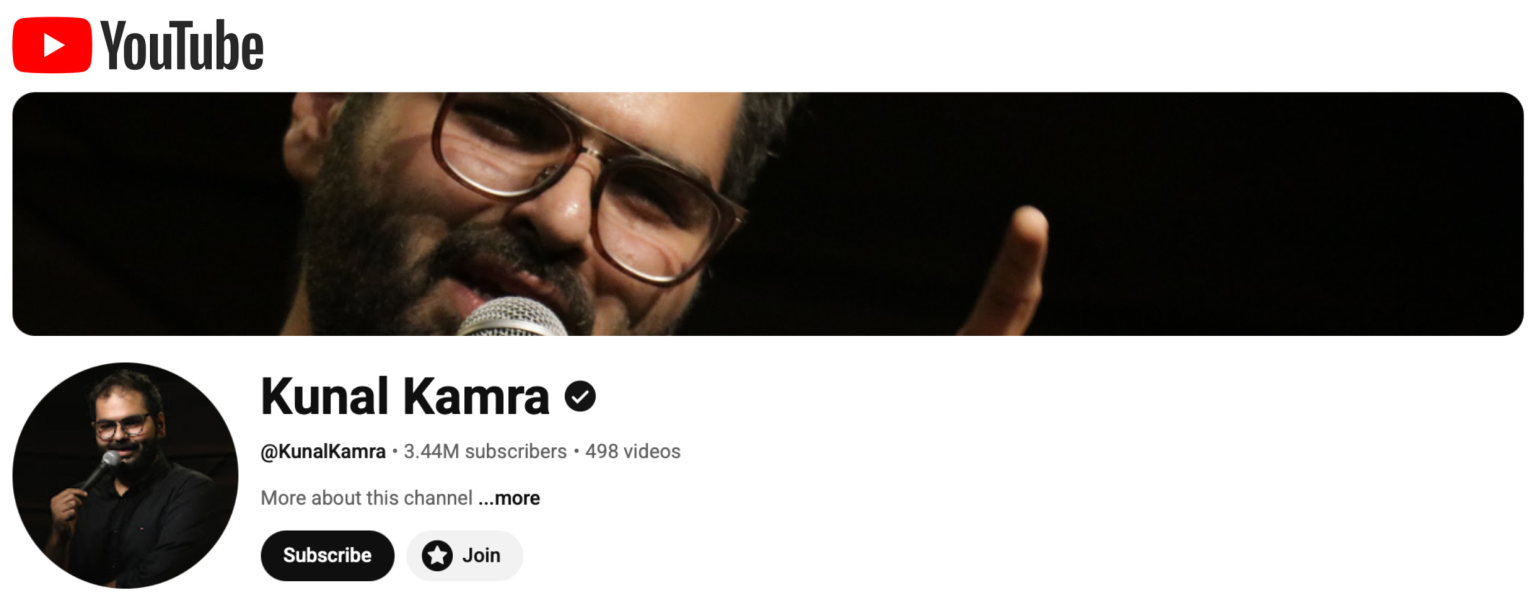
Humor is a powerful mode of counterspeech.86 As strategies, humor and satire operate as counterspeech by showing both the factual inaccuracies and absurdity inherent in bigotry and hate. The Indian context reveals several powerful examples of the highly effective use of humor as a means of countering hate and critiquing the abuse of state power. Varun Grover, a writer, lyricist, and stand-up comedian, whose YouTube channel commands over 1.3 million followers, and Kunal Kamra, a comedian and satirist, who has a staggering 3.4 million plus followers on YouTube and over 5 million across Instagram, X and Facebook, have emerged as leading voices in drawing attention to excesses of state power, attacks on minorities, and the attrition of social harmony, democracy, and pluralism in India. Through their videos, stand-up specials, and tours in India and overseas, which combine insightful humor, a fine sense of playfulness, and an elegiac sense of pathos for an India riven by hate, both figures have become significant exemplars of counterspeech and of the power of humor and satire to combat hate. That their highly popular work has sometimes drawn a virulent reaction from right-wing and majoritarian nationalists is, ironically, more evidence of the power of humor and satiret.
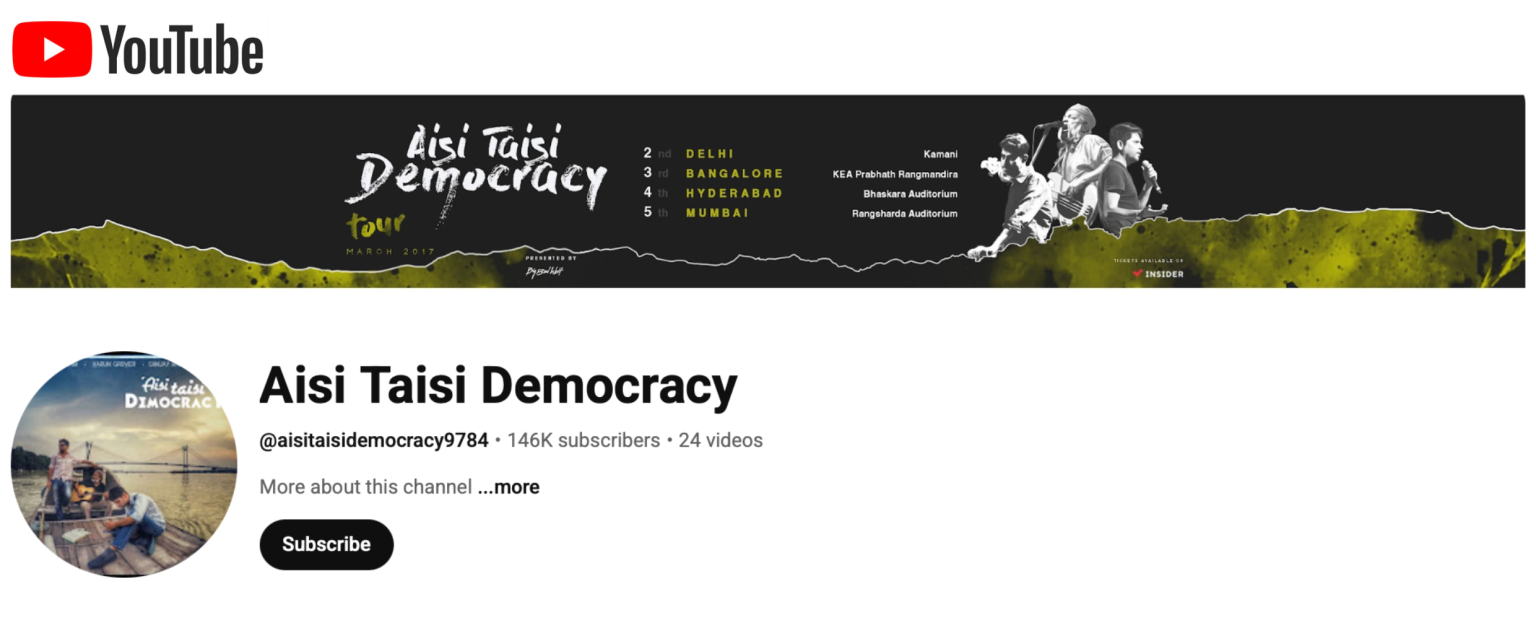
Aisi Taisi Democracy, a musical and satirical collective that posts its videos on social media and also tours the country, has developed a cult following, especially, but not only, among younger Indians and the diaspora. Its shows are sold out both in India and abroad. What is notable about ATD is its originality in creating a form of art and humor that does not merely mimic the well-worn tropes or structures of stand-up comedy.
The Desh Bhakt (literally, the nationalist or one who is devoted to the country) is a satirical video show, also doubling as a podcast, created by Akash Banerjee, that mocks the absurdity of hypernationalism and unthinking adulation of chauvinistic political leaders by their followers by portraying such sentiments in a deliberately exaggerated, unironic, and naive fashion. The title of the show is a play on the word ‘bhakt’ or devotee, a term used to describe Narendra Modi’s ardent admirers and apologists.87
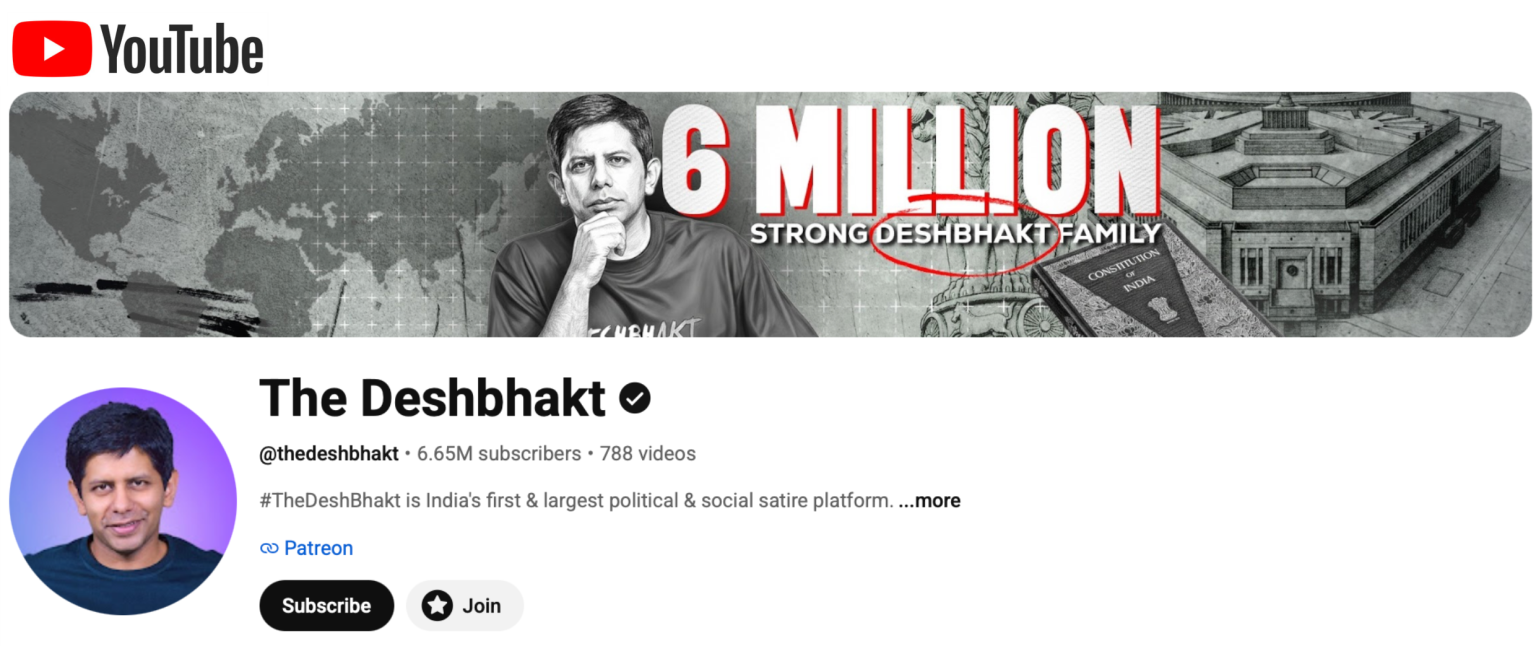
With 6.3 million followers, the Desh Bhakt reaches a massive audience, indicating that there is a market for sharp humor as well as an openness on the part of Indians for political satire and critique. Sanitary Panels, a webcomic started by Rachita Taneja in 2014 in protest against the government’s curbing of free speech, has become a celebrated and steady source of witty commentary on social inequity, injustice, and unfair government policies that impinge on freedoms or contravene justice.88 Sanitary Panels has over 125,000 followers on Instagram and nearly 50,000 on X.
Through sharp commentary on social issues, Aisi Taisi Democracy, The Desh Bhakt, and Sanitary Panels incisively identify the dangers of uncritical nationalism and jingoism, for they reveal how such sentiments are deeply intertwined with the spread of hate and harm sentiments. For example, Aisi Taisi Democracy has satirized the BJP’s rewriting and selective account of history to legitimize Hindu nationalist ideology.89 The Desh Bhakt has addressed the upsurge in communal hatred during the BJP rule in several episodes of his show.90 Sanitary Panels offers a droll take on everything from lack of airline safety to regressive state policies on women’s rights, offering a counterperspective to pro-government propagandist accounts on social media that promote and defend Indian government policies.
Another influential example of humor-based counterspeech in India is Official PeeingHuman, a satirical social media account with a collective following of over 3.4 million across various platforms. It gained prominence through memes, parody videos, and short mashups that critique political power, media narratives, and social hypocrisy.
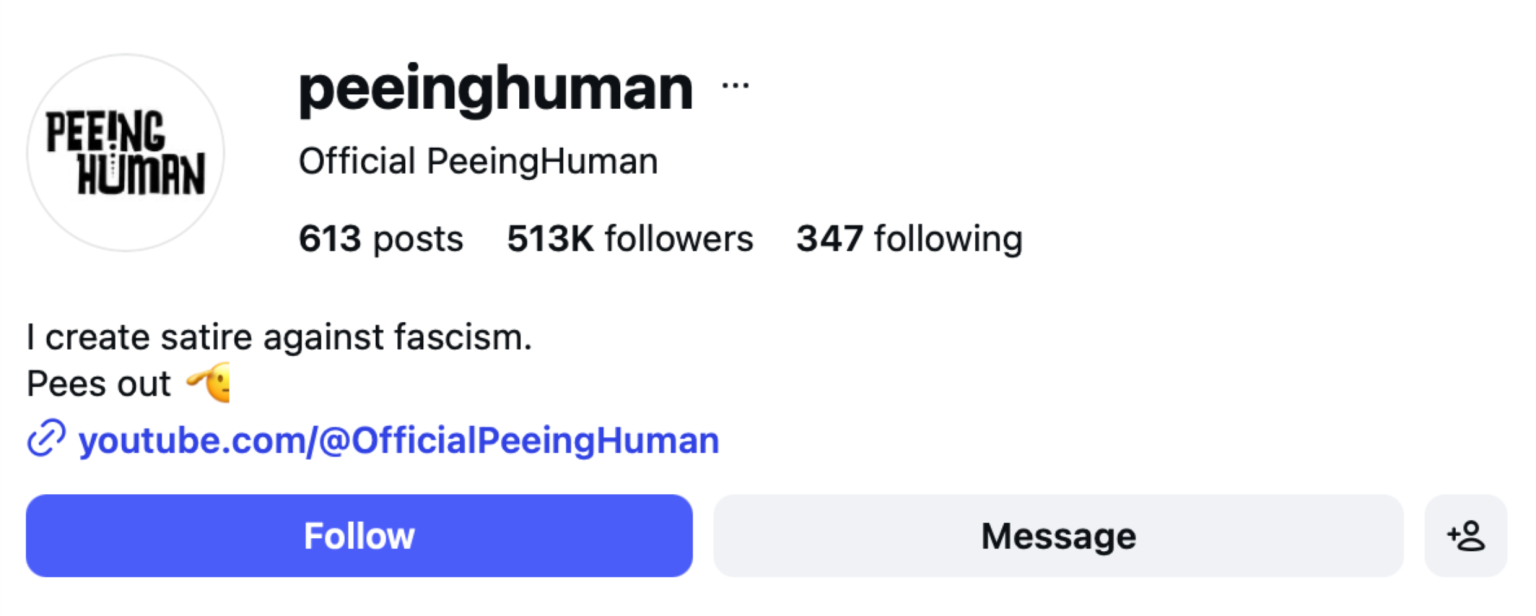
Its content draws on popular culture, film clips, and everyday language, using irony and exaggeration to comment on government claims, nationalist rhetoric, and the normalization of exclusionary ideas. Its content circulates widely on social media, allowing satire to reach audiences who may not engage with traditional news or political commentary. In a media landscape that has become increasingly polarized and rigid, such content creates space for dialogue and resistance, making the act of questioning power both accessible and necessary.
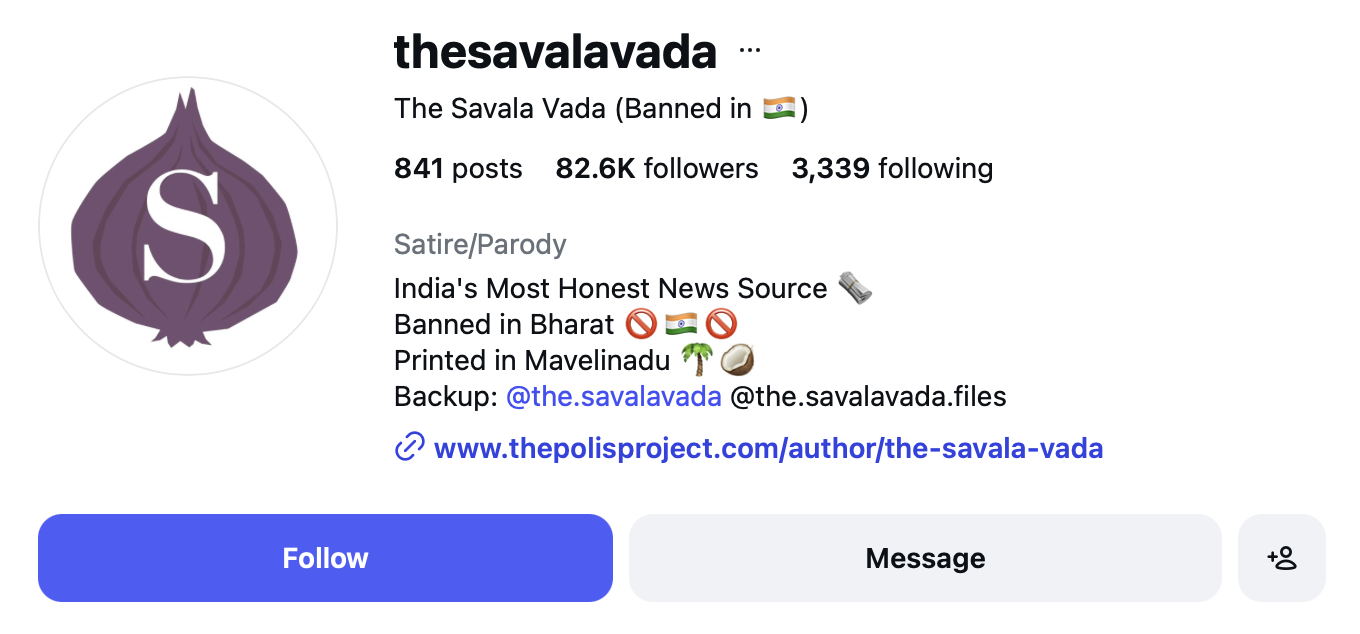
The Savala Vada, which describes itself as “India’s Most Honest News Source,” serves as another powerful form of humor-based counterspeech. It’s an anonymous satirical Instagram page, with 83,000 followers, whose name combines savala (the Malayalam word for onion) with vada, the iconic South Indian snack. Using striking visuals and concise, sharply written captions, the page employs humor and parody to critique political rhetoric, expose hypocrisy in mainstream discourse, and challenge the spread of hate speech and disinformation online.
As a form of counterspeech, The Savala Vada is particularly effective because it lowers the emotional temperature of polarized debates while still conveying sharp political critique. Its anonymous and meme-based format also enables wide circulation across platforms, especially among younger audiences, allowing counterspeech to travel through the same informal networks that often carry disinformation.
III. Community and Citizen Activism
In both democratic and non-democratic societies, community and citizen activism have provided robust spaces and tools for counterspeech, enabling the generation of counternarratives that challenge the rhetoric and power of the state. Such activism also operates as a bulwark against the unjustly imposed will of the majority and the targeting of vulnerable groups.
One of the earliest and most rigorous examples of community-based counterspeech in the Indian subcontinent is the Khudai Khidmatgar (Servants of God) movement,91 founded in the 1920s by Abdul Ghaffar Khan in the North-West Frontier Province, now in Pakistan. The movement is often described as one of the world’s largest nonviolent movements and was rooted in the principles of disciplined nonviolence, service (khidmat), humility, and moral courage. In the face of colonial repression and deepening communal polarization, Khudai Khidmatgar functioned as a form of preventive counterspeech by reshaping social norms and collective identity so that violence itself became morally illegitimate.
The movement operated at the community level and at its height counted more than 100,000 members. Volunteers wore red uniforms and took a formal oath of nonviolence and service, pledging to serve humanity in the name of God, to refrain from violence and revenge, to forgive oppression and cruelty, and to devote at least two hours each day to social work. Through strict discipline and collective ethical practice, Khudai Khidmatgar members resisted British colonial rule through sustained nonviolent action, challenging the assumption that political resistance required armed struggle.
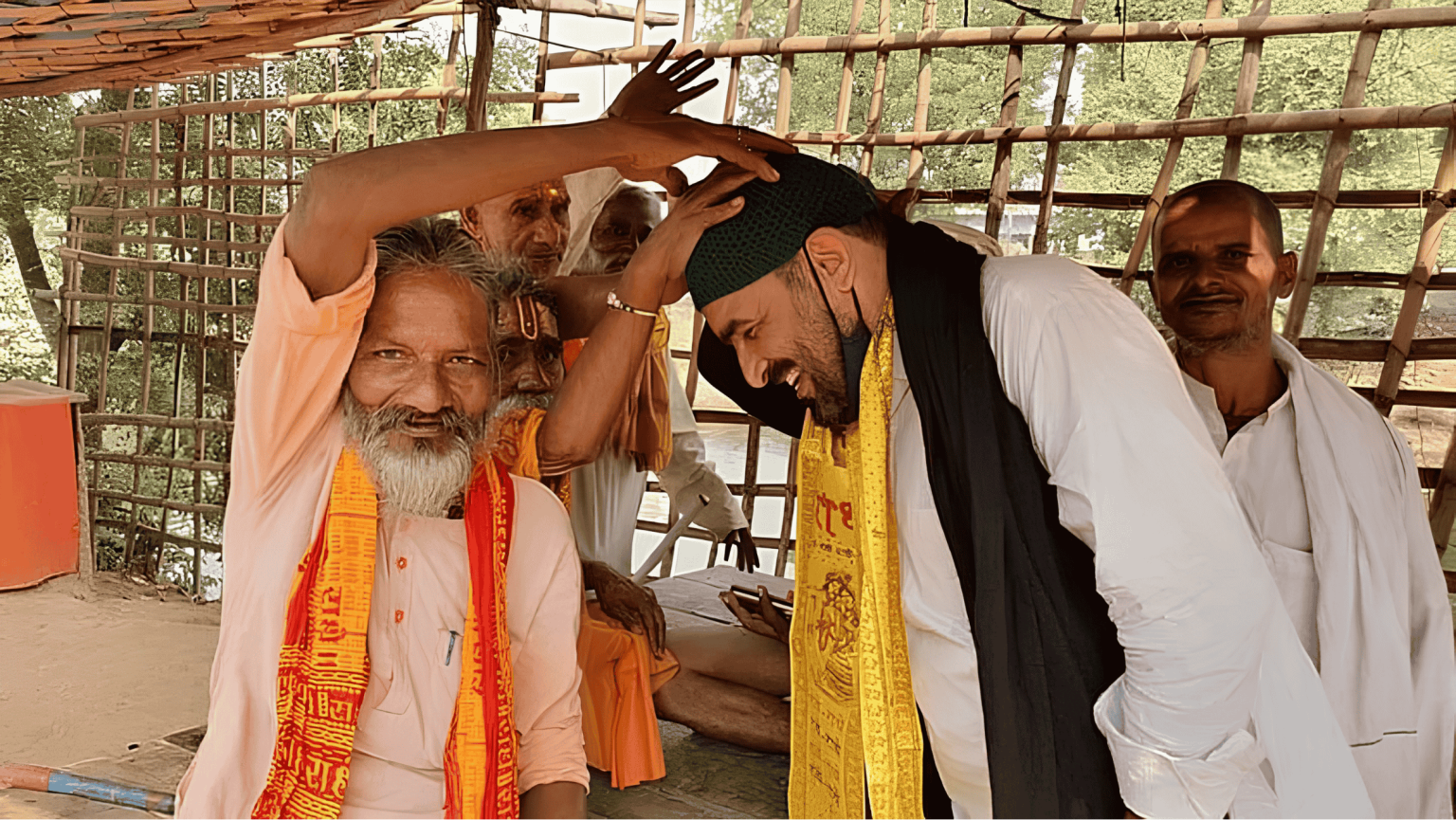
The Khudai Khidmatgar model demonstrates how counterspeech can function as social infrastructure, reducing the receptivity of communities to hate before it escalates into polarization and violence. It works upstream by reshaping identities, moral vocabularies, and social expectations in ways that make hate and violence harder to mobilize in the first place. In contemporary India, the legacy of the movement has been consciously revived and adapted by activist Faisal Khan, who has drawn on the Khudai Khidmatgar legacy in response to rising majoritarianism, mob violence, and religious polarization.
Inspired by Abdul Ghaffar Khan’s model, Faisal Khan has articulated a vision centered on unity, justice, and the transformative potential of interfaith engagement. Under his leadership, Khudai Khidmatgar initiatives seek to carry the message of sadbhavna (harmony) to villages, local communities, and individuals, emphasizing service, solidarity, and moral courage as responses to hate.92 These qualities can also be seen in other citizens’ movements that have pushed back against the abuse of power by the postcolonial Indian state and against state-affiliated and state-endorsed majoritarian violence.
The imposition of Emergency in India in 1975 sparked a wide range of citizens’ activist movements, which served as a crucible for India’s human rights movements.93 The history of grassroots activism, both urban and rural, on a range of issues, provides another valuable precedent for counterspeech initiatives in India.94 Protest movements embody the value of counterspeech in that they are acts of speaking truth to power, though the goals of protest movements are broader. The stifling of dissent under the current BJP regime has been described as another Emergency and has catalyzed similar community and citizen activist responses. In recent years, such initiatives include a 2017 movement against mob lynchings, the We Are With Kashmir movement in 2019, which helped vulnerable Kashmiris who were facing attacks across India in the wake of a terror attack in Pulwama, and the Sewa ke Haath movement, which helped victims of the 2020 Delhi riots.95 Especially noteworthy in this regard is the Indian farmers’ movement of 2020 –2021, which, by some estimates, may have been the largest and longest protest movement in history.96 The nonviolent protests, unbowed in the face of state repression, were successful in forcing the Indian government to repeal reforms to India’s farm laws, which, farmers and activists contended, would have hurt farmers’ interests to the benefit of corporations.97
Professor VK Tripathi’s model of distributing pamphlets door-to-door for communal harmony and engaging in direct conversations with people about the subject is another compelling example of a social movement, in which education, democratic dialogue, and compassion coalesced into an especially robust form of counterspeech.98
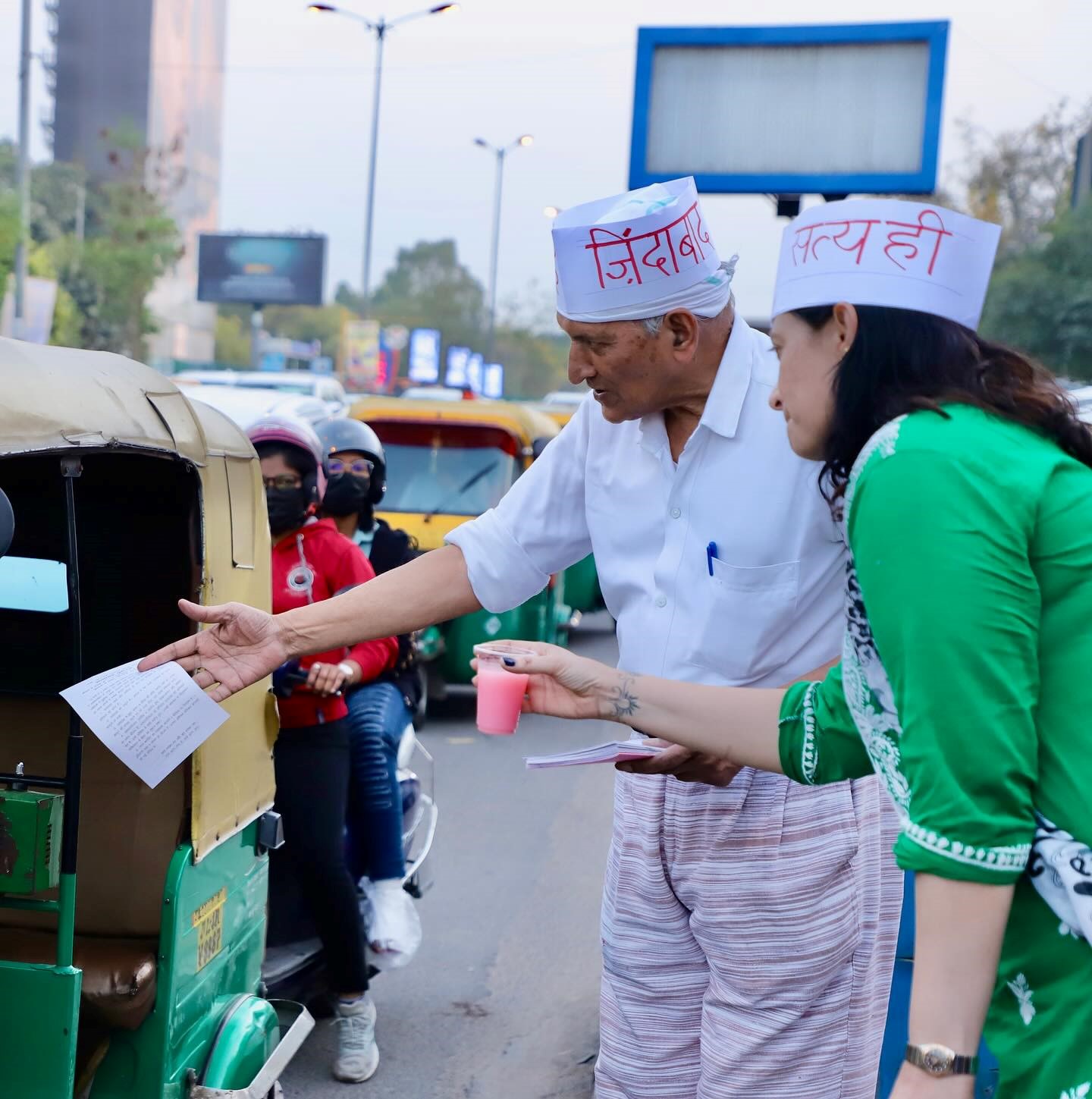
(Credit: CJP Via Rakhi Tripathi’s Facebook)
VK Tripathi distributing pamphlets with his daughter Rakhi Tripathi (Credit: CJP Via Rakhi Tripathi’s Facebook)
A retired septuagenarian, Professor Tripathi has been on a mission for several years now in various north Indian states, the hotbed of hate and violence, to create awareness about social justice issues. His activist initiative and experiences are shared on social media by his daughter Rakhi Tripathi, which amplifies their impact by spreading awareness of his mission and expanding the audience for dialogue in the digital realm. Though he has faced some harassment in the course of his important work, Professor Tripathi remains undaunted.99 He notes that his interactions with people have largely been positive. His initiative provides inspiration for both in-person and online movements against hate, revealing the potential of conversation to shift people’s views.
IV. Faith-Based Dialogue
Along with histories of communal tension and discord, India also boasts a long tradition of interfaith practices and dialogue, reflecting principles of compassion, empathy, and democratic dialogue.100 From a global and historical perspective, interfaith dialogue emerged as an instrument of “cultural diplomacy” for maintaining “religious harmony and peace” in the twentieth century and has been successful in both Western and non-Western contexts.101 In India, faith-based and interfaith dialogue has a critical role to play in countering hate and fostering democracy, given the widespread radicalization of Hindu youth, especially on grounds of religion.102 State institutions, including the police and local administrations, as well as government proxies, are complicit in the Hindu right-wing project of the normalization of prejudice and hate. The authority of religious figures and community leaders thus makes them especially important actors and interlocutors in countering the tide of radicalization.
Though there are significant challenges to achieving meaningful interfaith and intrafaith discussions and exchanges, religious leaders and community leaders can counter hate narratives with positive faith-based messaging.103 All major faith traditions contain elements and aspects that are conducive to religious harmony, though interfaith initiatives also need to evolve and adapt to current-day challenges.
A minimal common program that emphasizes the constitutional democratic rights available to all citizens in India, the need to hold state authorities accountable for fomenting or ignoring religious oppression, and the necessity of combating mistrust between religious communities can provide a meaningful framework for interfaith and intrafaith counterspeech. Such discussions do not necessarily need to erase or even minimize religious differences and incompatibilities in religious worldviews. An important consideration for interfaith and intrafaith initiatives is the need to protect the right to freedom of expression, wherein legitimate criticism of religious traditions should not be stifled on grounds of maintaining communal harmony and fighting hate speech.
A Hyderabad-based youth development organization called Rubaroo – Coming ‘Face to Face’ runs Agaaz-e-Baatcheet (a call to initiate a conversation) initiative for holding interfaith dialogue. According to the group, “it is an arena for young people to introspect and interpret the underlying message of different faiths and religions and embrace the commonalities among them.” 104
Satya Dharma Samvaad, an organization led by Swami Raghavendra, a Hindu religious leader based at the Ram Janaki Ashram in Muzaffarpur, Bihar, organizes interfaith dialogues across different parts of the country. The group, which includes hundreds of Hindu monks, was founded “by the compassionate Acharyas of the Hindu religion to counter hatred” and to “share the message of fraternity and compassion.” It has also publicly spoken out against anti-Muslim hate speeches by fellow Hindu monks, describing such rhetoric as “antithetical to Hindu values and teachings.” 105
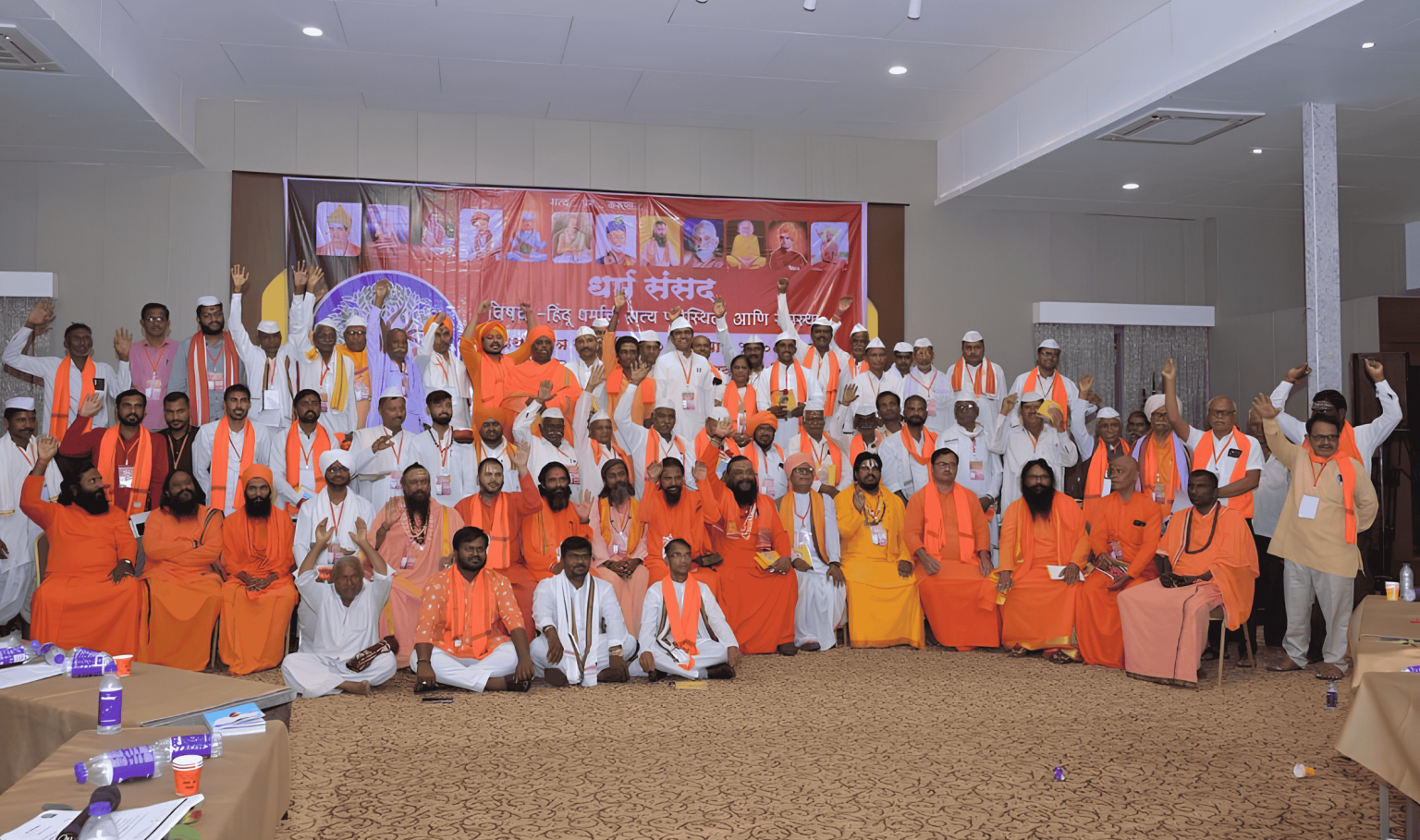
Over 100 Hindu monks gather in Kolhapur, Maharashtra in October 2024 for the need to foster interfaith dialogue and build a society free from discrimination
The Sikh tradition of the langar, or the free communal meal that is open to people from all backgrounds, is a fine exemplar of an Indian religious tradition of inclusion and pluralism that stands as a counterpoint to narratives of religious exclusion or the denigration of those from another faith tradition.106 Emphasizing the equality of all human beings, the langar challenges both the idea of religious hierarchies and caste inequities within and beyond Sikhism, operating as an inclusive space for building and reinforcing communal solidarity. The principle represented by the langar can be extended to challenge caste-based exclusion around food, challenging prejudices about food, purity, and touchability, and, more broadly, around casteism, which is an ugly reality among all Indian religious communities. Though the langar is not structured expressly around dialogue, it represented a powerful example of interfaith and intra-faith equality and solidarity, which is the minimal necessary condition for productive dialogue and exchange to take place.
Recent interfaith initiatives in India have focused on the potential of multi-faith dialogue as a means of directly countering hate speech.107 Inter-faith dialogue has also proven to be valuable in the context of crises, such as the COVID-19 pandemic, that may not be rooted in religious tensions but in which religion can easily be exploited by bad-faith actors. In India, the pandemic was weaponized by Hindu nationalists to target Muslims, based on spurious accusations that Muslim cultural and religious practices were instrumental in the spread of the virus and that Muslims were intentionally spreading the virus out of anti-Hindu and anti-Indian sentiment. The Tablighi Jamaat, a Muslim religious organization, was vilified in the media for holding an event in 2020, which saw a spike in cases. The hounding of the Jamaat quickly morphed into an attack on Indian Muslims in general.108 Muslims were accused of engaging in “Corona Jihad,” an alleged conspiracy to spread the virus through unhygienic and unsanitary actions. In response, people from different religious backgrounds, as indeed from a range of cultural and social groups, joined forces to combat the communalization of the crisis.109 Though such initiatives did not receive widespread coverage, nor could they arguably compete with the orchestrated campaign to demonize Muslims and foster sectarian discord, they nonetheless stand as instances of citizens mobilizing across faiths to combat hateful speech.
During such exceptional times, as in the case of the pandemic, interfaith dialogues can also ensure that minority rights are protected and that no faith is given preferential treatment by the state. For example, in 2020, the International Committee of the Red Cross organized a virtual interfaith discussion in India with representatives of religious communities to ensure that members of all faith traditions were able to ensure the dignity of those who had passed away as a result of contracting the virus, given the constraints imposed by government regulations.110 While state action is clearly needed to ensure that such initiatives are followed in practice, a unified voice of prominent civil society groups and representatives of religious organizations and communities can have a positive and salutary effect toward realizing the objective.
V. Legal Leverage
Constitutional protections, Public Interest Litigation (PILs), and findings by human rights organizations and government-appointed commissions can be used to clear space for counterspeech and bolster its basis. These measures reflect the principles and strategies of democratic dialogue, truth, and creating educational awareness.
National commissions of inquiry into communal violence and hatred, such as the Srikrishna Commission111 of inquiry into the 1992-93 sectarian riots in Bombay, and international human rights organizations, including Human Rights Watch112 and Amnesty International,113 have consistently found the Indian authorities culpable of indifference to and complicity in serious human rights abuses. Reports of national commissions and international rights organizations form an important archive of accountability, bearing witness, and functioning as counterspeech to acts of violence. Though public interest litigation is often misused in India, it has provided a useful basis for questioning the role of authorities in communal violence and hatred. Such litigation can itself be viewed seen as a form of counterspeech, even if some PILs are dismissed by the courts.114
Although the Indian courts have delivered a mixed bag of rulings on free speech,115 most recently in a case involving allegedly defamatory remarks116 against Prime Minister, Narendra Modi and his mother, existing laws can be leveraged to clear a space for free speech and counterspeech. In 2015, in its judgement regarding Shreya Singhal v. Union of India, the Supreme Court ruled that Section 66A of the Information Technology Act was unconstitutional.
Section 66A sought to punish anyone who used a computer or communication technology to disseminate content that was offensive or false and intended to cause harm. The petitioners in the case had argued that the law was arbitrarily general and vague and exceeded the scope of reasonable exceptions to the constitutional right to freedom of expression.
More recently, in 2024, with regard to Kunal Kamra v. Union of India, the Bombay High Court ruled that a government fact-checking unit to vet material on social media was unconstitutional. Though the case is due for hearing before the Supreme Court, for now it represents a temporary reprieve for users of social media who may express views that the Indian government considers problematic. A number of additional judgments regarding hate speech also empower counterspeakers to challenge and push back against hate speech.117
Citizens for Justice and Peace (CJP), a Mumbai-based human rights movement dedicated to upholding constitutional freedoms and defending the rights of marginalized groups, including religious and ethnic minorities, women, Dalits, Adivasis, and other vulnerable communities engages in strategic legal interventions, filing petitions before courts and statutory authorities to challenge hate speech, discrimination, and communal violence, and to ensure accountability for perpetrators. CJP’s work also includes legal campaigns against hate speech in media and public discourse, submissions to commissions and regulatory bodies, and efforts to educate citizens about constitutional protections and pluralism. Through its use of litigation, public interest petitions, and constitutional advocacy, CJP exemplifies how legal action can safeguard space for counterspeech and hold both state and non-state actors accountable amid rising hate and polarization.
Similarly, the Hate Speech Beda, or Campaign Against Hate Speech, founded by a group of activists, lawyers, and academics in Bengaluru, Karnataka, works to combat hate speech by training volunteers across the state to use legal tools to address hate crimes. The initiative combines strategic litigation with grassroots capacity-building, filing cases while also conducting workshops that equip communities to identify, document, and report hate speech.
Art, in all its forms, has always operated as a fertile source of counterspeech and speaking truth to power. Art incorporates under its umbrella the imperatives of humor, satire, empathy, and education. In the postcolonial Indian context, art, defined broadly to include the visual arts, music, poetry, literature, and other cultural forms such as street theater, has functioned as a reservoir of counternarratives that challenge sectarian hatred and chauvinist sentiments. These artistic legacies, still extant in Indian societies, can be mobilized for counterspeech efforts in the present, through creative use of traditional media as well as digital tools and platforms.
The Jana Natya Manch was a pioneering Indian street theater group dedicated to affirming secular, inclusive, and democratic values through art. The tragic murder of Safdar Hashmi, playwright and director, in 1989 provided the impetus for the founding of Sahmat, an art collective centered on keeping the same values alive. Sahmat’s projects “have cut across class, caste, and religious lines and have involved artists, performers, scholars, and a wide array of other participants, such as Hindu, Sikh, and Muslim auto-rickshaw drivers.”118
Indian poetry, rooted in India’s spiritual and secular traditions, including Kabir’s dohas119 or rhyming couplets and Urdu poetic traditions such as rekhta,120 is a living form of counterspeech that celebrates the multilayered, rich, and pluralistic character of Indian identities. In conflict zones and areas torn by violence, such as northeast121 parts of India and Jammu and Kashmir,122 poetry is an act of bearing witness, a resonant cry against injustice, and an expression of grief, trauma, and loss.
Artists like the actor Aami Aziz,123 Manoj Bajpayee124 or Hussain Haidry125 have used poetry, including in the spoken word idiom, to express their anguish at religious strife or to stake a claim to belonging in India as minorities. In these settings, poetry operates as a counternarrative to majoritarian nationalist and statist accounts of violence, identity, and belonging. Marginalized groups have also used art to emphasize their histories of oppression, pain, and exclusion.
The Dalit Lekhak Sangh,126 for instance, is a 25-year-old collective of Dalit writers who share their work and experiences. Hindustani classical music, reflective of India’s syncretic, multifaith culture, is both symbol and vehicle of values that challenge religious divisiveness and animus. Hindustani classical music, as one perspective articulates, is a secular form that cannot be pigeonholed as either purely Hindu or Muslim music.127 Among contemporary musical forms, Indian hip-hop is also a medium for countering religious hatred and affirming democratic values.128 In this respect, Indian hip-hop echoes the founding impulse of hip-hop in the US as a means of articulating political resistance and demanding social justice.
VI. 1. Music
Music has long functioned as a powerful tool for social commentary, collective memory, and moral persuasion.129 Across cultures and historical periods, it has been used to challenge injustice, resist oppression, and bring divided communities into conversation with one another. In this sense, music clearly fits within the framework of counterspeech, particularly when it seeks to confront hateful or violence-inciting ideas, promote coexistence, or discourage the spread of exclusionary narratives.
The Indian subcontinent used music as a secular glue. The Bhakti130 and Sufi movements131 serve as the historical blueprints for music as a tool for brotherhood. Figures like Kabir132 and Bulleh Shah133 used their verses to bypass rigid religious and social hierarchies, creating a shared cultural space that didn’t require a specific creed to enter. Their poetic art, which has been set to music by generations of artistes, was a form of early social commentary that promoted a common human identity over the divisions of caste or religion.
This syncretic tradition continued through the Bauls of Bengal, who included both Hindus and Muslims and whose folk music rejected social divisions in favor of what they described as a “religion of humanity.”134 It also carried forward through the evolution of qawwali.135Although qawwali is rooted in Sufism, it developed into a shared cultural heritage across what is now India and Pakistan, drawing audiences from multiple religious backgrounds.
In the post-independence period, music in Bollywood became another major site for promoting secularism and national unity.136 Lyrics emphasizing peace, brotherhood, and shared struggle were woven into popular culture and reached audiences far beyond elite political spaces. Composers and lyricists often drew on syncretic traditions.
VI. 2. Hip-hop and Counterspeech
To understand rap as counterspeech, one must look at its birth in the 1970s South Bronx in New York City.137 It emerged as a direct response to systemic racism, police violence, neglect, and poverty. Chuck D, lead rapper of the Rock & Roll Hall of Fame group Public Enemy, once famously noted that rap became the “CNN of the ghetto.”138 The lyrics of these rap songs describe lived experiences with poetic precision. Early hip-hop artists humanized their struggles and directly challenged the harmful narrative imposed on them.
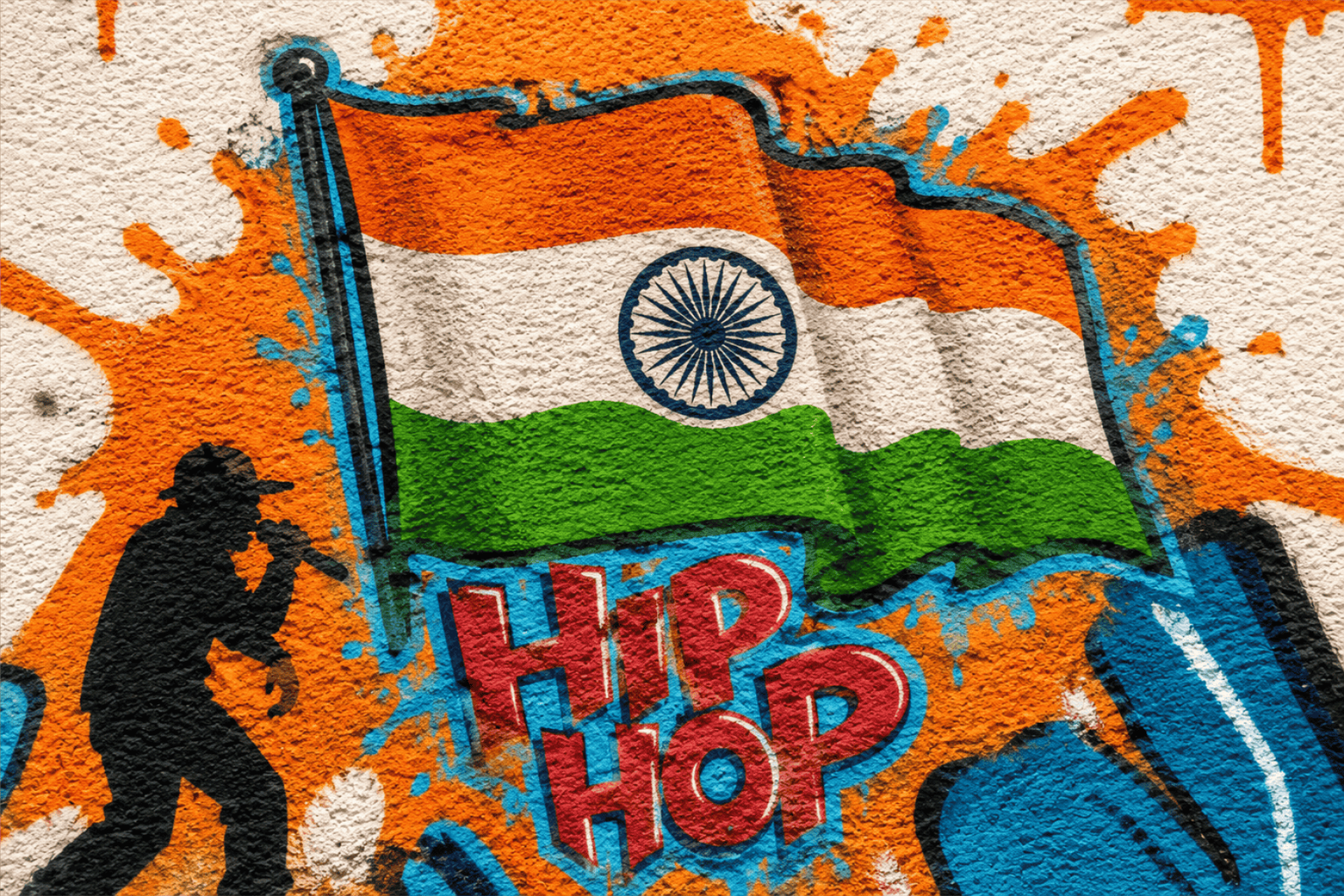
This tradition of speaking truth to power quickly became a global language. From the anti-apartheid movement in South Africa,139 the Arab Spring,140 the farmer’s movement in India,141 music in general and hip-hop in particular have been the universal tongue of the underdog. Rap provides a rhythmic platform to challenge hate, majoritarian narratives, authoritarianism, and social injustice.
Rap music has had a presence in India for nearly three decades, with some of its earliest and most visible political expressions emerging from Kashmir.142 However, over the last five to seven years, rap has increasingly been adopted across different regions as a form of counterspeech against harmful narratives targeting religious minorities, caste-oppressed communities, and other marginalized groups. During this period, Indian rap has also become a vehicle for challenging exclusionary nationalism, majoritarian political rhetoric, and the normalization of social and economic injustice.
Much of this music is produced outside formal industry structures. Young rappers, cutting across religious lines and often without labels or professional recording setups, use mobile phones, freely available beats, and social media platforms to record and circulate their work. Many of these songs rapidly go viral, resonating with audiences who may share similar frustrations but lack conventional avenues to express them.
Rap artist Ommy Khan, a young Muslim man in his twenties from the state of Maharashtra, released a song titled “Desh Ki Awaaz” (The Country’s Voice), in which he reflects on the growing Hindu–Muslim divide alongside escalating conflicts over language and identity. 143 Through the song, he urges people to speak up and not remain silent, warning that indifference allows hatred to spread until it eventually reaches one’s own doorstep.
“Neither Hindus are in danger from Muslims, nor Muslims are in danger from Hindus. It is our country that is in danger,” the lyrics state.
The song received over 100 million views on Instagram and more than 20 million views on YouTube.
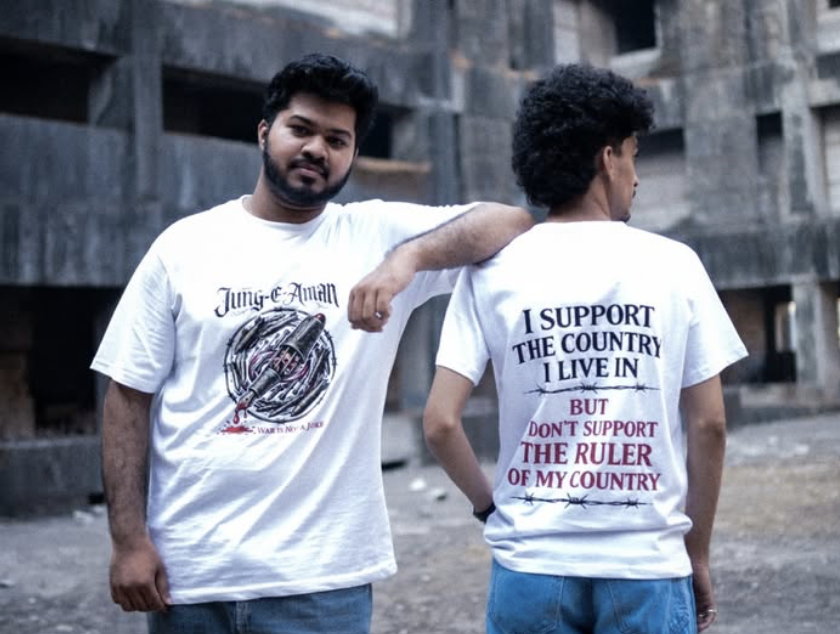
Mahi Ghane, who performs under the stage name Mahi G, is an Adivasi artist from the Mahadev Koli community in Maharashtra, whose rap centers on indigenous identity, environmental justice, and social exclusion. Drawing on lived experience, her music challenges dominant statist and societal narratives about development, highlighting challenges such as displacement, deforestation, and marginalization. that emerge as a result of development initiatives. 144
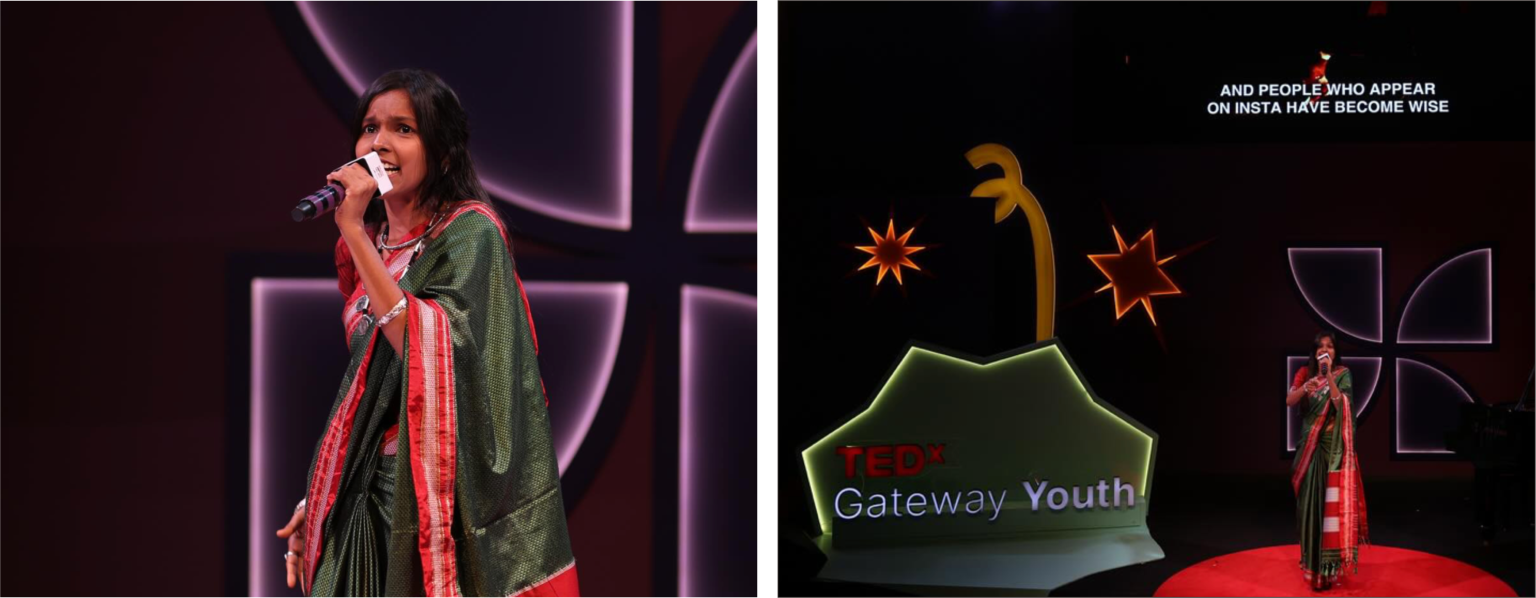
Rap artist Mahi G
Sumeet Samos is a Dalit rapper, music artist, and, now, a scholar, from Odisha whose music confronts caste discrimination, exclusion, and everyday violence.145 Rooted in lived experience and Ambedkarite politics, his rap challenges narratives that normalize caste hierarchy and silence Dalit voices.146
Rap’s effectiveness as counterspeech lies not only in its lyrical content but also in its cultural positioning. It speaks in vernacular languages, uses everyday metaphors, and circulates through the same digital platforms where misinformation and hate spread. This allows it to reach audiences that may be disengaged from formal political debate but are deeply embedded in popular culture.
As such, music, and especially rap, should be understood as a substantive and effective tool within broader counter-hate and counterspeech strategies, particularly in engaging youth audiences who are often both the primary targets of extremist mobilization and the most active participants in digital culture.
VII. Digital Disruption
Digital disruption refers to counterspeech strategies that intervene directly in the circulation of dominant narratives, interrupting, reframing, and destabilizing the stories that sustain hate and exclusion.
While online or hashtag activism is sometimes dismissed as symbolic or performative, numerous campaigns across the world demonstrate how digitally mediated interventions can expose injustice, mobilize solidarity, and translate online speech into offline action. The #MeToo campaign against sexual assault, started in 2006 by Tarana Burke, which eventually grew into a powerful global social movement, is a noteworthy case. India too has seen several such online campaigns, which are potent examples of counterspeech against injustice, hate, and violence.
In 2017, Indians widely participated in the #NotInMyName campaign in protest against the murder of Muslims and Dalits by Hindu far-right cow vigilante groups on spurious grounds of allegedly smuggling or killing cows or eating beef.147 The campaign started with a Facebook post and developed into protests on the ground in fifteen Indian cities as well as in London.
Feminist activists have used hashtag activism to highlight and mobilize support for a range of causes involving domestic abuse, sexual abuse, oppressive patriarchal norms, and gender injustice.148 Some of these campaigns include the #Nirbhaya campaign in response to the brutal sexual assault and murder of a young woman in Delhi in 2012, centered on justice for the victim and protesting the lack of safety for women in India, and #LahukaLagaan, a 2017 movement protesting a tax levied against sanitary napkins, which succeeded in getting the tax removed.
The #MeTooIndia movement was inspired by the global #MeToo movement of 2018. Members of the caste-oppressed Dalit communities have also used social media platforms and hashtag activism to speak up about systemic and structural oppression as well as pervasive caste prejudice in Indian society.149 Two examples of such campaigns are the #DalitWomenFight campaign to highlight violence against Dalit women and the #WhyLoiter online movement asserting the right of Dalits to participate in public spaces with full rights and equality.
This form of digital disruption is especially significant in the Indian context because hate against Muslims, Christians, Sikhs, and caste opressed communities is not primarily driven by spontaneous prejudice or isolated slurs. Instead, it is organized around a small set of high-impact far-right myths, rooted in historical and structural oppression, that are repeatedly circulated until they acquire the appearance of common sense. These narratives, often framed as “jihad” conspiracies, form the ideological infrastructure of contemporary Hindu nationalist mobilization.
VII.1. Myth-Disruption Model
The Myth-Disruption Model is therefore best understood as a core digital counterspeech strategy within the ecosystem described above; one that is designed to attack these narratives at their root rather than endlessly reacting to their latest expression.
In India, for example, the “Love Jihad” myth frames ordinary interfaith relationships as a secret Muslim conspiracy to convert Hindu women and weaken Hindu society. It draws on colonial-era tropes about Muslim men as predators and Hindu women as vulnerable property. It was revived and weaponized by Hindu nationalist organizations in the 2000s to justify violence, policing of women’s bodies, and social segregation. When a mob attacks an interfaith couple or when a politician calls for laws against “Love Jihad,” the mistake of counterspeakers is to argue only about the individual case. The Myth-Disruption Model instead breaks the narrative into parts: what is the claim, where did it come from, who promotes it, and what purpose does it serve? Doing so collapses the underpinning narrative. There is no statistical evidence of a coordinated conversion campaign, Indian courts have repeatedly rejected the claim, and the groups pushing it are the same organizations that benefit politically from polarizing Hindu voters.
The same approach applies to dismantling the “demographic replacement” or “population jihad” myth, which claims that Muslims and Christians are bearing more children in order to overwhelm Hindus and turn India into an Islamic or Christian state. This myth travels easily between India and the diaspora because it mirrors Western “Great Replacement” conspiracy theories promoted by white supremacists. In both contexts, demographic anxiety becomes a way to justify discrimination, harassment, and violence. The Myth-Disruption Model shows that birth-rate differences are shrinking in India, that Muslims and Christians remain political and economic minorities in the country, and that the myth is spread by Hindu far-right influencers who profit from fear and outrage.
In diaspora communities, these myths are often presented in even more extreme form. WhatsApp groups spread Hindu nationalist propaganda originating in India among Hindu immigrants who feel culturally dislocated and politically insecure in the West. In these spaces, anti-Muslim and anti-Christian myths are framed as a defense of Indian identity abroad.
The Myth-Disruption Model reframes hate from an intuitively held belief to a manufactured product. People may sincerely experience fear about the claims underlying the myths, but that fear has been carefully cultivated. This model exposes the design behind the narratives and acts as a tool of media literacy and political education.
WhatsApp is well-known as a major conduit of misinformation and hate speech in India.150 However, Indian citizens have also used it as a tool to launch campaigns to fight communal discord and engage in counter-narrative storytelling that squarely combat the hateful content circulating on the social network.151 Given the pervasiveness of WhatsApp groups in Indian society, spanning families, school and college groups, professional groups, and resident associations, WhatsApp holds immense potential as a platform for counterspeech in the Indian context.
Together, hashtag activism, peer-to-peer interventions, and the Myth-Disruption Model constitute a coherent strategy of digital counterspeech. These tactics together exemplify multiple counterspeech strategies of education, amplification, and moral accountability to transform fragmented individual experiences into collective resistance. They give voice to the voiceless and orchestrate the experiences and perspectives of individuals across diverse settings into a single coherent and strong speech act. The campaigns also embody the values of empathy and compassion, asking us to imagine ourselves in the place of survivors of violence or assault and truth. They aim to bring to light experiences of oppression that have hitherto been unknown or ignored.
Such campaigns of digital disruption challenge the legal, political, and social status quo on a number of matters, influencing social opinion even if they do not always result in immediate political and legal change. With the advent of new AI platforms and tools, new technologies in the digital domain can also be mobilized to automate such campaigns.
VIII. Social Media Reels and Counterspeech
In recent years, Instagram reels created by Hindu and Muslim individuals, especially youth, promoting communal harmony, secular values, and mutual coexistence have emerged as a notable response to the spread of hate and communal misinformation in India’s online ecosystem. These reels often take the form of short skits, satire, everyday conversations, or collaborative performances between Hindu and Muslim friends. Many directly challenge or mock Hindu far-right narratives, while others focus on dismantling harmful myths about Muslims or highlighting shared cultural and social realities. Such content serves as a clear and meaningful form of counterspeech when most of the harmful narratives emerge and proliferate on social media platforms.
The choice of Instagram as a medium is particularly significant. Meta-owned platforms play an outsized role in shaping public discourse in India. Facebook alone has over 400 million users in the country, reflecting its deep penetration across regions, languages, and demographics.152 Instagram has an even larger user base, with more than 480 million users in India.153 Importantly, Instagram reels that are set to be recommended can also be shown to users on Facebook, allowing this counterspeech content to travel across platforms and reach audiences well beyond a creator’s immediate follower base. This cross-platform amplification makes Instagram reels a strategically important site for intervening in the spread of communal narratives and misinformation.
This intervention is especially effective in a polarized information environment where members of minority communities are routinely portrayed as threats, outsiders, or enemies of the nation. These reels counter those portrayals by offering alternative narratives that emphasize shared humanity, social coexistence, and constitutional values.
One of the most important features of this form of counterspeech is its visual and relational nature. Hindu nationalist narratives in India increasingly rely on images, videos, memes, and short clips rather than long ideological texts. Reels created by Hindu and Muslim creators, sometimes individually or jointly, operate within the same visual grammar. They speak the language of the platform and of the audience. As a result, they are able to challenge hate narratives from within the same communicative space.
Several high-reach creators illustrate how this form of counterspeech operates in practice. Team Hasle (@teamhasle) is an Instagram account run by five friends, both Hindus and Muslims, that uses comedy and satire to challenge harmful narratives targeting minorities and to draw attention to broader social issues such as unemployment, pollution, and development. Through sarcastic skits, the group frequently mocks Hindu far-right myths and majoritarian talking points. Many of their short-form reels reach tens of millions of viewers.
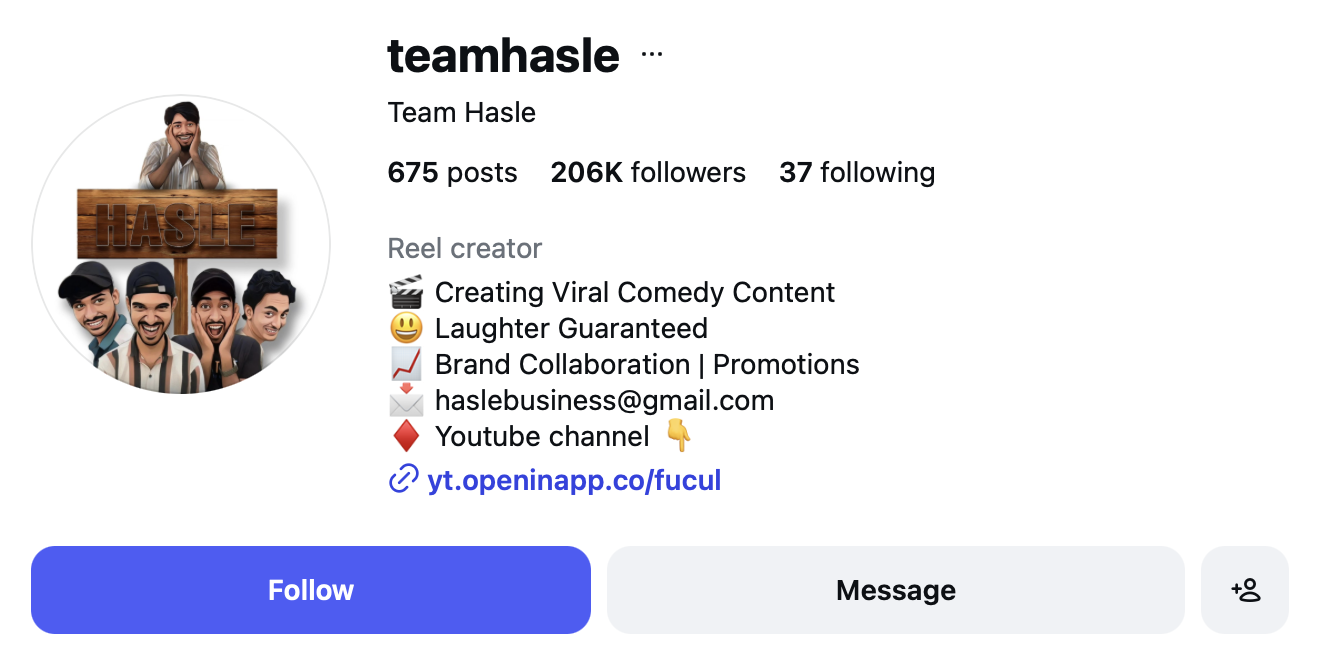
Tiger Yadav (@tigeryadav519) is another Instagram account that produces short comedy clips mocking harmful statements by political and religious leaders. Through satire, the account exposes hypocrisy and contradictions in their public messaging, using humor to challenge narratives that normalize discrimination or exclusion. The account has over 636,000 followers.
Umesh Choudhary (@umesh.leader), who has over 44,400 followers, creates reels that critically examine how communal Hindu–Muslim polarization is used by the government to deflect attention from governance failures. His content frequently focuses on systemic issues such as the poor state of the education system, arguing that public discourse is deliberately diverted from real policy challenges toward manufactured narratives portraying “Hindus in danger” from Muslims. One of his reels on this topic was watched by 16 million people.
Similarly, Vishal Shastri (@theramvishal) has over 78,200 followers and uses humor to mock harmful narratives targeting minorities, critics, and dissenters. His content often employs satire and speculative scenarios to warn audiences about the potential consequences of current political and social trends, encouraging viewers to reflect on the direction in which these narratives are leading.
Hundreds of such high-reach accounts now exist on Instagram, many of which have emerged over the last two years in response to growing frustration with persistent communal misinformation, divisive rhetoric, and the normalization of exclusionary and violent narratives. These creators increasingly use their online presence as a form of civic intervention, seeking to counter hate through accessible, platform-native content rather than formal political engagement.
Research on misinformation suggests that such low-friction corrections can be more persuasive than confrontational fact-checking, particularly when delivered by peers or relatable figures rather than authorities.154
At the same time, it is important to acknowledge the limitations of such forms of social media content. Not all harmony-focused or satirical reels are equally effective as counterspeech. Some primarily reach audiences already sympathetic to pluralistic values, while others may oversimplify complex issues or avoid addressing deeper power asymmetries. Effectiveness depends on factors such as audience reach, tone, consistency, and the ability to engage viewers who are undecided or only loosely influenced by majoritarian narratives. These limitations do not undermine their classification as counterspeech. Rather, they point to the need for greater recognition, research, and support for such interventions. Platform algorithms also play a critical role and should prioritize the amplification of counterspeech content, particularly in countries where the risk of violence against vulnerable minorities is high.
In both the Indian and Indian diaspora contexts, Instagram reels (TikTok in the diaspora context, as TikTok remains banned in India) represent a culturally and technologically relevant form of counterspeech that merits serious attention in research, policy discussions, and counter-hate strategies.
IX. High-Profile Actor Accountability
One of the most dangerous features of anti-minority hate in India is how it is constantly portrayed as spontaneous public anger or the work of a few hate groups. The High-Profile Actor Accountability model of exposure rejects this framing. It shows that hate in India is not a grassroots phenomenon; it is driven, financed, organized, and amplified by organized supremacist movements, politicians, wealthy individuals and special interest groups.
In practice, this means naming the politicians who deliver hate speeches and attend hate rallies, the religious leaders who incite violence, individuals or corporations who fund extremist organizations, and the media houses that normalize or excuse it. This exposure model pulls these figures out of the shadows and places responsibility where it belongs. The narrative shifts from “people are angry” to “powerful actors are mobilizing hate for political gain.”
In India, doing this is crucial because state institutions often refuse to act on hate. The police look away, the courts move slowly, and ruling-party politicians enjoy impunity. Exposing high-profile actors becomes a form of accountability when formal systems fail, and it turns anonymous mobs into traceable networks.
This model is equally important in the diaspora. Hindu nationalist organizations operating in the US, UK, Canada, and Australia often present themselves as well-meaning cultural or religious groups while quietly fundraising and campaigning for extremist causes in India. Through exposing these organizations, their leadership, and their ties to violent actors back home, counterspeech punctures the myth that diaspora hate is merely “overseas patriotism” and connects it to the transnational supremacist political project.
This exposure also disrupts the emotional logic of hate. When people believe they are acting in defense of their community, they feel morally justified in expressing hate. When they see that they are being mobilized by politicians, godmen, corporations, billionaires, and media personalities who gain power and money from their fear, the basis for that justification dissipates, offering an opening for a change in views.
X. Memory and Archiving
Authoritarian and extremist movements thrive on forgetting. But memory is power. It allows victims to be believed, perpetrators to be named, and societies to confront what they have allowed to happen.
In India, it has often been seen that hate speech is delivered, violence follows, and then the incident of violence is denied, minimized, or erased. The Memory and Archive Strategy allows for preventing this cycle, especially where state institutions and large media outlets often fail to hold perpetrators accountable. Documentation becomes a form of resistance against oppression.
Sabrang India has played a foundational role in preserving the public memory of communal violence and organized hate in India. Emerging in the early 1990s amid the rise of Hindu nationalism, Sabrang’s long-running publication Communalism Combat and its digital successor SabrangIndia have systematically documented episodes of communal violence, hate speech, and state complicity that were often minimized or erased in mainstream narratives.
Delhi-based People’s Union for Civil Liberties (PUCL) has long functioned as a source for a counter-archive to state narratives through its fact-finding reports, testimonies, and documentation of communal violence, custodial abuse, and civil liberties violations. At moments when official institutions have suppressed information or reframed violence as “law and order” issues, PUCL’s records have preserved names, timelines, and institutional failures.
Similarly, the Association for Protection of Civil Rights (APCR) combines legal advocacy with the systematic documentation of hate crimes, arbitrary arrests, demolitions, and communal violence. Its case databases, legal briefs, and ground reports preserve evidence that might otherwise be lost to intimidation, media silence, or bureaucratic erasure.
Hindutva Watch operates as a real-time archive of hate crimes, mob violence, demolitions, and vigilantism linked to Hindu nationalist mobilization. The group preserves videos of hate crimes, hate speech, violence, and eyewitness accounts and prevents incidents from disappearing once social media virality subsides, and makes the archival accessible for the public including policymakers and researchers. The archive makes visible the repetition and geographic spread of violence, countering claims that such acts are isolated or exaggerated.
India Hate Lab documents in-person hate speech events delivered by political leaders, religious figures, and far-right organizations, creating a durable archive of a record of incitement that might otherwise be dismissed as rhetoric. The group records dates, locations, speakers, language used, the target group, calls to violence, calls to arms, calls for the removal of places of worship, and targeting of minorities and refugees in India. The project exposes how hate speech functions as infrastructure and is systematic, coordinated, and closely tied to offline harm.
Through the act of archiving evidence of hate speeches, hate crimes, and other acts of violence, as well as mapping networks and tracking offenders, counterspeech creates an irrefutable public record. This destroys plausible deniability and forces patterns of hateful acts into view.
For Muslims, Christians, Sikhs, and caste-oppressed minorities, this matters because violence against them is often portrayed as isolated or reactive. Archiving such hate and violence that it is systematic also helps communities understand that what they are seeing online and offline is part of a long pattern.
Hate grows where people feel abandoned, fearful, and powerless. In India and in the diaspora, many people are drawn to extremist narratives not because they want to harm minorities but because they feel they are losing control over their future. Umeed (Hope) serves as the core of our counterspeech initiative, offering an alternative story that replaces fear with participation.
Instead of a future built on revenge, hope presents a future built on justice, dignity, and shared security. Instead of “we must crush them,” it offers “we can all be safe.” This is especially powerful in India, where cycles of violence from partition to numerous riots over the years have left deep scars across communities. Muslims and Christians are not scheming for dominance; they are asking for safety. Hindus who reject extremism are not betraying their identity; they are defending a vision of a pluralistic India.
In the diaspora, hope counters the bitterness that comes from dislocation and cultural anxiety. It reminds people that their children’s future is not protected by importing India’s conflicts, but by building inclusive, democratic communities where no one is targeted for who they are. This manual seeks to empower people to practice these principles in their speech and actions.